Plenty of full restaurants lose money, and the owners don't catch it until it's a crisis. In Canada, food services and drinking places posted an operating profit margin of just 4.1% in 2024, according to Statistics Canada, thin enough that one bad habit can erase it. This guide hands you the tools to read your numbers, track what counts, build a budget, control costs, and weigh delivery revenue.
Why restaurant finances are so hard to manage
A restaurant is one of the most complex small businesses there is. You're managing four hard variables at the same time:
High transaction volume, every single day
Perishable inventory that loses value by the hour
Labour costs that move with every shift you schedule
Several revenue channels flowing in side by side
Most owners juggle all of that with no finance team and no spare time. So the bookkeeping slides. You put it off until cash runs short or a slow month exposes a gap you didn't see coming.
You can build a simpler system, starting today. This article is for educational purposes only and does not constitute financial advice; for guidance specific to your business, consult a licensed financial advisor.
The financial statements every restaurant owner should know
You'll work from three reports: the income statement, the balance sheet, and the cash flow statement. They work best together because no single report tells the whole story.
Income Statement (Profit & Loss)
The income statement, also called a P&L or profit and loss statement, shows how much money your restaurant brought in and how much it spent over a set period, and whether you ended with a profit or a loss.
A typical P&L lists a few core line items:
Total revenue, broken down by channel where possible (dine-in, delivery, pickup)
Cost of goods sold (COGS), the direct cost of food and beverages
Labour costs, wages and benefits for your team
Occupancy costs, such as rent and utilities
Net profit, what remains after every expense
Review your P&L at least once a month.
Small leaks are easy to miss and expensive to ignore. Understand where your money is going: little numbers become big numbers over time, and a line-by-line review of your restaurant profit and loss statement is where you'll spot them.
Balance Sheet
The balance sheet shows what your restaurant owns versus what it owes at a single point in time. On one side sit your assets: equipment, inventory, and cash. On the other sit your liabilities: loans, unpaid invoices (your accounts payable), and other debts.
This document says less about day-to-day operations and more about long-term health. Use it to track how much debt you carry and whether the business is building value over time.
Check it once a quarter, or more often if your business calls for it.
Cash Flow Statement
A restaurant can look profitable on paper and still run out of cash if income and expenses arrive at different times. The cash flow statement tracks your cash inflows and outflows during a period, so you can see whether you'll have enough in the bank when bills are due.
This is the document most owners say they wish they had watched more closely before a slow season hit.
Cash, not sales, is what sinks most restaurants. Watch this one closely.
Key financial metrics to track for your Canadian restaurant
Statements give you a wide view. Metrics are the numbers to know by heart. Track these five, learn how to find them, and you'll spot trouble before it reaches your bank balance. Each comes with a simple formula you can run in a minute.
1. Food Cost Percentage
The share of revenue you spend on food and beverages.
To find it, divide your food and beverage costs by your food and beverage sales, then multiply by 100.
In Canada, the cost of goods sold was the largest operating expense for food services and drinking places in 2024, at 35.9% of total expenses, according to Statistics Canada. Where you land depends on your concept and menu.
2. Labour Cost Percentage
The share of revenue you spend on wages, benefits, and employer payroll contributions.
Divide total labour costs by total revenue, then multiply by 100.
Statistics Canada also reports that salaries, wages, commissions, and benefits made up 33.6% of total expenses for Canadian food services and drinking places in 2024.
3. Prime Cost
Your food cost and labour cost added together.
The formula: (food and beverage costs + total labour costs) ÷ total revenue × 100.
Prime cost rolls up your two largest expenses into one number, which is why many operators watch it daily. In Canada, cost of goods sold and labour together made up 69.5% of total operating expenses for food services and drinking places in 2024, based on Statistics Canada figures.
4. Net Profit Margin
What remains after every expense.
Divide net profit by total revenue, then multiply by 100.
Margins tend to be thin, often in the low single digits for independent restaurants, and your average profit margin will vary by restaurant type. Read it as context, not a target. Small, steady gains in cost control can move this number more than you'd expect.
5. Average Order Value (AOV)
The typical amount a customer spends in a single transaction.
Divide total revenue by total number of orders.
Tracking AOV by channel, dine-in versus delivery, shows you which channel earns the most per order, so you can focus your attention where it pays off.
Keep these five somewhere visible. Reviewing them weekly turns vague worry into a clear signal you can act on.
How to build a restaurant budget
A budget is a written plan for where money will come from and where it will go. That's all. Even a rough one can be enough to prevent unwanted surprises.
Start with revenue. Use your historical sales data, broken down by channel: dine-in, delivery, and pickup. That history is your foundation. If your restaurant is new and you have no history yet, use industry benchmarks for your concept type as a stand-in until real numbers come in.
Map out fixed costs. Rent, insurance, and loan payments stay the same month to month. List them first so you always know the floor you're working from. These are the costs you owe whether you serve 50 covers or 500.
Estimate variable costs. Food, labour, and supplies rise and fall with sales volume. Use the cost percentages from the section above, food cost percentage, and labour cost percentage, to project these relative to your expected revenue. As sales climb, these climb with them.
Build in a cash reserve. Set aside a small slice of revenue each month, even 1–2%, as a buffer. Slow seasons, a broken walk-in cooler, and surprise repairs all arrive without warning. A reserve keeps a bad week from turning into a crisis.
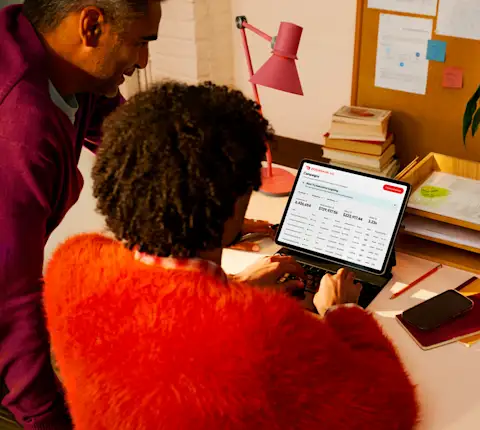
Technology can do some of the heavy lifting here. The Merchant Portal on DoorDash Marketplace breaks down your order and sales data by channel, which gives you a solid starting point for the revenue projections at the top of your budget.
How to control your biggest costs
Food and labour are your two largest expenses, so they're also your two largest opportunities. A point or two trimmed from either flows straight to your bottom line.
Food Cost
Food cost percentage tells you how much of your food revenue goes to ingredients. Four things tend to push it higher than it should be: inconsistent portions, over-ordering, spoilage, and supplier price hikes.
Standardize portions. Write recipes with measured amounts and train your team to follow them. Portion drift is slow and quiet, and it adds up to thousands over a year. Consistent portions also give customers the same experience every visit.
Review inventory weekly, not monthly. A weekly count means weekly corrections. By the time a monthly count reveals a problem, you've lost a month of margin to it. Weekly reviews catch spoilage and theft while they're still small.
Audit your menu for margin. Some dishes sell well but cost more to make than they return. Find them. Then adjust the recipe, raise the price, or rework the dish so the numbers make sense. Smart pricing protects margin without driving customers away, so pay close attention to your menu pricing strategy. How you present your menu shifts ordering, too. Adding clear descriptions and photos on DoorDash Marketplace nudges customers toward higher-margin items.
How you present your menu shifts ordering, too. Adding clear descriptions and photos on DoorDash Marketplace nudges customers toward higher-margin items.
Labour Cost
Two levers move labour cost: scheduling efficiency and turnover. Overstaffing during slow periods burns payroll you didn't need. Understaffing during a rush costs you sales and frustrates guests. Both hurt, and the fix for each starts with your sales data.
Use your historical sales to match staffing to demand. Look at which days and hours fill up, then schedule to those patterns instead of guessing. Reducing turnover helps, too, since every new hire requires hiring and training costs before they're fully productive.
Delivery orders often bunch up at peak times, like the dinner rush. The Merchant Portal shows you when they're going to hit, so you can staff those windows tight and stop paying for slow hours.
How to manage restaurant cash flow
As covered above, profit on paper and cash in the bank are not the same thing. You can post a profitable month and still scramble to cover payroll if your timing is off.
Managing cash flow comes down to a few habits you can build into your weekly schedule.
Review cash flow weekly, not monthly. By the time a monthly report lands, the shortfall has already happened. A weekly look gives you time to react, shift an order, or delay a non-urgent expense before it bites.
Negotiate supplier payment terms. Ask key suppliers to extend your payment window, say from 7 days to 14. You pay the same amount for the same goods, but you hold your cash longer, which gives you more room to manoeuvre during tight stretches.
Smooth out slow seasons with a rolling forecast. Pull last year's sales to see which months ran lean. Then plan ahead: trim hours, scale back ordering, and tighten variable spending before the slow weeks arrive rather than after.
Know your break-even point. Break-even is the minimum revenue you need to cover all your fixed and variable operating expenses. Once you know that number, tough weeks become easier to navigate because you can see exactly how far you are from covering your costs and decide quickly what to do.
Canadian Tax and Payroll Basics to Keep in Your Books
The sales tax you collect isn't your revenue. If your restaurant is registered for the Goods and Services Tax (GST) or Harmonized Sales Tax (HST), you collect it on the government's behalf and remit it with each return. The Canada Revenue Agency explains how this works. In Québec, Revenu Québec administers both the GST and the Québec Sales Tax (QST).
Keep collected tax and payroll remittances separate from your spending money. Remittance deadlines land on a fixed schedule, so plan for them in your weekly cash flow review. Rules differ by province, so confirm your obligations with an accountant.
How delivery revenue fits into your finances
Sooner or later, you'll ask: Is delivery making me money? Let's do the math.
Delivery order costs differ from dine-in costs. A delivery order doesn't tie up a table for an hour, so your occupancy cost per order runs lower, and the average order value often lands in a different place, too. Marketplace commission also shows up as its own line item, something a dine-in order never carries.
Remember: delivery brings in new customers. Delivery apps are a discovery channel: many of the customers who find you there are browsing and have never ordered from you before. And that's where many Canadians are looking. In DoorDash's 2025 Canada Delivery Trends Report, 56% of Canadian consumers surveyed said they prefer ordering out through third-party apps and websites.
So count delivery as added revenue, not stolen dine-in revenue. The Merchant Portal breaks out your order volume, average order value, and revenue by time period. Drop those numbers into the same tracking system you've built here.
Grow your revenue with DoorDash Marketplace
Understanding your finances starts with understanding your revenue. Every concept in this guide, from budgeting to break-even, rests on knowing what's coming in and when.
DoorDash Marketplace gives you order data, sales trends, and customer insights through the Merchant Portal. That kind of real-time visibility makes budgeting and restaurant sales forecasting far less of a guessing game.
Promotions, Sponsored Listings, and other Marketplace tools grow your top-line revenue, which makes every cost percentage easier to manage.