What is a restaurant concept?
A restaurant concept is the complete structural identity of your restaurant, including:
Service model
Menu style
Price positioning
Ambience
Target customer
Together, these decisions determine how you design, staff, and run the entire operation. The concept underpins everything, from your restaurant brand to your target audience, and sets the rules every other choice follows.
A concept is not the same as your restaurant's name, your décor, or the food category you serve. Those are surface layers. The dining concept is the operational blueprint behind every business decision you make before a single customer walks in.
Restaurant concept vs. theme vs. cuisine: what's the difference?
Operators mix up these three terms constantly, so here's what each means.
Your concept is the service and operational model: fast casual, ghost kitchen, fine dining.
The theme sits on top as an aesthetic layer: the tiki bar, the farm table, the industrial-chic room.
Cuisine is the food category itself: Mexican, Mediterranean, Japanese.
For example, a Mexican fast casual spot and a Mexican fine dining restaurant share the same cuisine, yet they run as completely different concepts. Different cost structures, different labor models, different customer expectations. They may serve the same food, but behind the line, the two business models look nothing alike.
Why your concept choice is a high-stakes business decision
Treat your concept as a structural business decision. Creativity comes later.
The model you choose should be based on expected labor costs, real estate footprint, food margins, and delivery revenue. The wrong concept will result in slow growth and expensive revisions.
How concept type shapes your cost structure
The concept you pick is what determines your costs. Food trucks and other delivery-only formats cost far less to launch than a brick-and-mortar build. Fine dining costs the most. It carries the highest labor and food cost as a share of revenue. Fast casual restaurants fall in the middle. They run on high volume and a lean operation. Price out each concept before you commit to one.
Why delivery compatibility must be part of the decision from day one
Decide on day one whether your concept is built for delivery. That choice shapes your service style, menu, packaging, and kitchen throughput. Decide early so you can build the kitchen to fit, instead of paying to retrofit a dine-in setup for delivery. We rate every concept for delivery compatibility in the next section. Step 3 then shows you how to apply those ratings to your shortlist.
8 core restaurant concept types
These eight types are the backbone of the restaurant industry. Read each one as a fit test for your own operation.
Ask yourself: Does this concept match the kitchen I run, the market I serve, and the margins I need? Then, evaluate each concept below according to its delivery compatibility rating: High, Medium, or Low.
1. Fast casual
What it is: Counter service with higher-quality ingredients than fast food chains and no full table service, at an average ticket of $10 to $18.
Market size: The US fast casual market reached approximately $48.5 billion in 2025 and is projected to grow at a CAGR of 6.4% through 2035, per Expert Market Research.
Best for: Operators with existing kitchen infrastructure and a back-of-house team already in place, since fast casual slots into that setup as a second concept.
Pros: Labor-efficient, strong consumer demand, scalable.
Cons: Crowded category, so you need menu or brand differentiation to stand out.
Delivery compatibility: High
2. Quick service (fast food restaurants)
What it is: High-volume, low-ticket food service ($5 to $12) that runs on systemization and maximum labor efficiency.
Best for: Franchise expansion rather than independent second concepts, because the operational systems pay off at scale.
Pros: Proven demand, high order frequency.
Cons: Hard to differentiate as an independent, and the unit economics favor the franchise model. Margins tighten without the volume the chains move.
Delivery compatibility: High
3. Casual / family-style restaurants
What it is: Full table service with a broad menu at a moderate price point of $15 to $30 per person.
Best for: Operators who already run front-of-house teams and want to serve dine-in and delivery demand, though the delivery menu needs curation.
Pros: High per-cover revenue, versatile menu, strong dine-in experience.
Cons: Higher front-of-house labor cost, and not every item on a casual dining menu travels well.
Delivery compatibility: Medium
4. Fine dining
What it is: The highest average ticket ($80 to $200+ per person) at the lowest seat volume, with food and labor running the highest as a share of revenue. Think white tablecloths, a designed dining room, and Michelin-level ambition.
Best for: Operators with a dedicated kitchen and service team, and markets where fine dining restaurants are underserved. Skip it as a second concept without that dedicated team.
Pros: Premium price positioning, strong brand prestige.
Cons: Highest capital and operational complexity, and the longest road to break-even.
Delivery compatibility: Low
5. Café and coffee shop
What it is: A smaller footprint with lower labor cost and high repeat-visit frequency, at an average ticket of $8 to $15.
Best for: Operators working the breakfast and lunch dayparts who want incremental revenue without full-service overhead. Food items travel for delivery; coffee does not.
Pros: Lower overhead, loyal repeat customer base, fast daypart turnover.
Cons: Limited evening revenue, and coffee quality drops on the trip to the customer.
Delivery compatibility: Medium
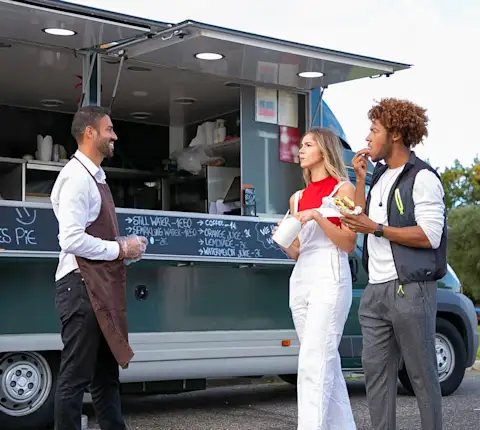
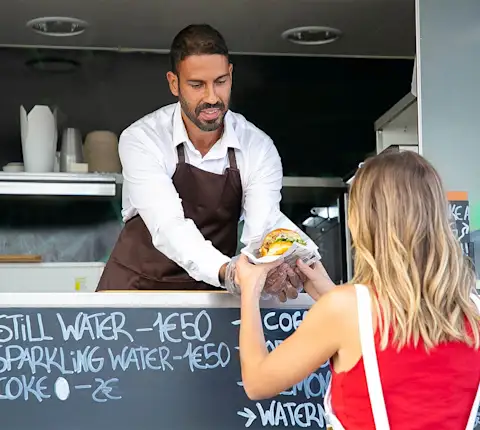
6. Food truck and pop-up
What it is: The lowest capital requirement of any physical concept, typically $50,000 to $175,000 for a truck buildout, with maximum location flexibility.
Best for: Operators who want to test a concept before committing to a brick-and-mortar second location. DoorDash Pickup orders can run at each stop, extending reach without managing delivery logistics.
Pros: Low startup cost, concept flexibility, strong for market validation.
Cons: Location variability limits delivery reliability, and revenue swings with the weather.
Delivery compatibility: Medium
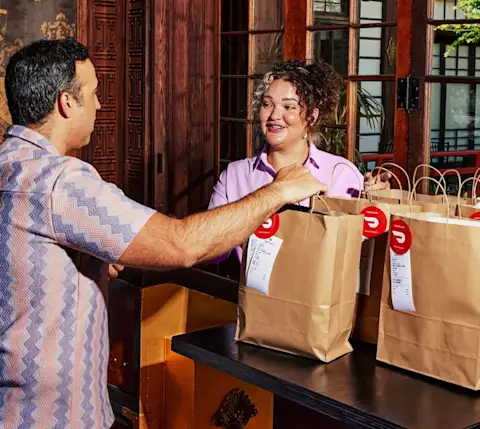
7. Ghost kitchen / virtual restaurant
What it is: A delivery-only model with no dine-in and no storefront. Startup costs run far lower than a traditional full-service buildout, since you skip dining room construction, front-of-house furniture, and a larger lease footprint.
Cost structure: Labor costs typically run lower than in traditional restaurants, since there's no front-of-house staff to support. Ghost kitchens have grown into one of the fastest-expanding segments in the industry. The global ghost kitchen market sat at approximately $88 billion in 2025 and is projected to grow at roughly 12% annually through 2032, per Coherent Market Insights.
Best for: Operators already running a kitchen, since you can launch one from off-peak capacity, making it the most capital-efficient expansion path available. With no storefront, your DoorDash Marketplace listing becomes the entire street presence, so menu photo quality, item descriptions, Sponsored Listings, and launch Promotions drive your first customers.
Pros: Lowest startup cost, runs from your existing kitchen, built for delivery.
Cons: No dine-in revenue, and you build brand awareness through digital channels alone.
Delivery compatibility: High
8. Bar and cocktail lounge
What it is: A beverage-driven, evening-focused concept with a high per-order ticket on drinks and food in a secondary role.
Best for: Operators with a late-night kitchen and an existing liquor license, where a bar runs as a companion concept. Alcohol delivery rules vary by state, so verify local regulations before you build delivery into the revenue model.
Pros: High beverage margins, strong evening revenue.
Cons: Complex, market-dependent alcohol delivery rules, and food-only delivery caps the revenue ceiling.
Delivery compatibility: Low
15 successful restaurant concept ideas to inspire you
1. Farm-to-table
Locally sourced, seasonal ingredients are now an expectation in urban markets. The concept works as a positioning layer on a casual or fast casual model. Relationships with local farms are essential, and margins can be tight without reliable supplier agreements.
Best for: Operators in urban or suburban markets with access to local farms and a culinary team that can adapt menus to the season.
Delivery compatibility: Medium
2. Health-conscious eatery
Plant-forward, macro-tracked, or allergen-specific menus are now full concepts. The 2026 DoorDash Delivery Trends Report found that 59% of consumers actively seek allergen or dietary information when ordering on a delivery app. Markets with few delivery competitors in this category hold the most room.
Best for: Operators with a kitchen set up for allergen-safe prep and dedicated menus.
Delivery compatibility: High
3. Fast casual bowls and grains
Grain bowls, protein bowls, and build-your-own formats, popularized by Sweetgreen and CAVA, are among the fastest-growing fast casual subcategories. The customizable option increases sales and ticket averages above standard fast casual and holds up in transit. It runs as a standalone location or a virtual brand off existing capacity.
Best for: Operators with prep capacity for proteins and grains who want a delivery-native concept without much added equipment.
Delivery compatibility: High
4. Virtual delivery kitchen
A delivery-only brand run from your kitchen during off-peak hours. Multiple brands can run at once from one kitchen, each a separate Marketplace storefront, which multiplies your discovery surface without adding space. Indianapolis-based ClusterTruck runs this at scale.
Best for: Operators with off-peak capacity who want Marketplace revenue without the capital of a new location.
Delivery compatibility: High
5. Gourmet burger concept
Premium burgers at fast casual prices, proven by Shake Shack, Five Guys, and Smashburger. These companies rely on something unique to separate them from fast food: an ingredient story, wagyu beef, a smash technique, locally sourced buns. In a crowded category, that differentiator is what sets you apart.
Best for: Operators with grill capacity and a back-of-house team experienced in high-volume burger production.
Delivery compatibility: High
6. Pizza concept
One of the most delivery-native concepts in the business: high margins on dough and toppings, strong repeat frequency, broad appeal. It works as a ghost kitchen, a fast casual spot, or a neighborhood dine-in. Add-ons like garlic knots, wings, and salads lift the average ticket without adding complexity.
Best for: Operators with a deck or wood-fire oven and a back-of-house team that can produce at volume during peak windows.
Delivery compatibility: High
7. Breakfast and brunch concept
Breakfast delivery is underserved compared to lunch and dinner, which opens a discovery gap on the Marketplace. Repeat frequency is high among loyal morning customers. The concept asks for early hours but carries lower ingredient costs and simpler prep than dinner.
Best for: Operators whose kitchens sit idle in the morning and want to fill that capacity without much capital.
Delivery compatibility: High
8. Ethnic fusion
Cross-cultural menus, Korean-Mexican, Japanese-Peruvian, West African-Southern, create instant differentiation without heavy expenditure to explain the idea. The format serves ghost kitchens or food trucks, where menu photography and item descriptions tell the story.
Best for: Operators with a team that has authentic command of two or more food traditions and the consistency to execute at volume.
Delivery compatibility: High
9. Tasting menu / chef's table
Reservation-driven fine dining at a high ticket ($100 to $300+ per person) with limited covers per service. It’s good as a premium revenue layer on an existing fine dining operation, rather than a standalone build. The format demands exceptional culinary and front-of-house execution.
Best for: Operators with an established fine dining brand who want an exclusive, higher-margin format inside their space.
Delivery compatibility: Low
10. Dessert and bakery concept
Dessert bars, artisan bakeries, and patisseries pull strong afternoon and weekend traffic, and shareability drives organic discovery. Delivery works for robust items like cakes, cookies, and pastries, but not plated desserts. The concept fits operators with pastry talent and off-peak capacity.
Best for: Operators with a strong pastry program who want to turn it into a standalone revenue stream.
Delivery compatibility: Medium
11. Plant-based / vegan concept
Plant-based menus draw flexitarians, health-focused diners, and environmentally conscious customers, which widens your customer base from day one. Menu simplicity keeps ingredient costs manageable. The category keeps growing on Marketplace, especially in urban markets where options are limited.
Best for: Operators in urban markets with a culinary team experienced in plant-based techniques.
Delivery compatibility: High
12. Elevated comfort food
Familiar dishes cooked to a high-quality standard: premium mac and cheese, chef-driven fried chicken, house-made meatballs. The food has broad appeal and strong repeat behavior. It is among the most accessible ghost kitchen categories because comfort food travels almost perfectly.
Best for: Operators who want a high-appeal concept without educating customers on a new cuisine.
Delivery compatibility: High
13. Seafood concept
Fresh seafood across price points, from fast casual fish tacos and poke bowls to full-service raw bars. Formats like poke, lobster rolls, and fish sandwiches perform strongly on delivery. The concept works best in coastal and urban markets with a reliable fresh supply chain.
Best for: Operators in coastal or urban markets with reliable supply and a back-of-house team comfortable with high-volume seafood prep.
Delivery compatibility: Medium
14. Ramen and noodle concept
Long-simmered broths and customizable toppings create high perceived value at a low ingredient cost per bowl. The concept has strong dine-in appeal, and delivery works with packaging that keeps broth separate. Demand keeps growing in suburban markets that Asian noodle concepts have underserved.
Best for: Operators with experience in Asian food traditions and the kitchen to produce large-batch broths during off-peak prep.
Delivery compatibility: Medium
15. Late-night concept
The 10pm to 3am window draws steady demand from bar crowds, shift workers, and late-night diners, with almost no competition in most markets. Menu simplicity is essential: fries, sliders, wings, and tacos outperform complex dishes at this hour. Delivery demand climbs sharply after 10pm, which makes this a natural Marketplace-first category for idle late-night kitchens.
Best for: Operators whose kitchens go dark after 9pm and have the staffing to run a lean after-hours shift.
Delivery compatibility: High
How to choose the right restaurant concept
Use these four steps to pressure-test a concept against your own operation.
Step 1: Audit your existing kitchen and team capacity
Map what your current setup can support. A ghost kitchen launched from off-peak capacity needs almost no added capital. A concept that demands a separate prep line, more back-of-house staff, or a new POS is a different investment. Find your excess capacity, then pick the concept that fills it.
Step 2: Research local market demand and delivery gaps
Find the concepts your delivery zone underserves. Check which cuisine types show up often in Google Trends and Yelp searches in your area, then see whether those categories have few local competitors.
The 2026 DoorDash Delivery Trends Report found that 55% of first-time DoorDash orders came from customers browsing rather than searching for a specific restaurant, so a new concept in an underserved category has a discovery advantage from day one.
Step 3: Match your concept to its delivery compatibility
Apply the delivery ratings from the concept profiles to your shortlist. The question: Does this food hold its quality through a 15 to 30 minute delivery window? A Low concept should earn its money on dine-in. A High concept can lead to delivery.
Step 4: Run the unit economics
Do the math before you sign a lease or commission a buildout. Projected average ticket times weekly order volume times food margin, gives you the weekly contribution before fixed costs. Set that against your startup capital and time to break even. Delivery Analytics in the DoorDash Merchant Portal gives you baseline order frequency and average ticket data for comparable concepts.
Launch your new concept on DoorDash Marketplace
You've done the hard part: choosing a concept that fits your kitchen, your market, and your margins. Now comes the fun part: putting your concept in front of its first customers.
DoorDash Marketplace connects you with millions of customers already looking for somewhere new to eat. Launch a ghost kitchen from your prep space, add a virtual brand to your lineup, or open your second location across town, and run all of it from one Merchant Portal. No separate account.
A complete Storefront ensures discoverability from day one. Add a launch Promotion to turn first-time browsers into first-time orders. Switch on Sponsored Listings when you're ready to scale, surfacing your concept when customers search your category.