The restaurant industry brought in $1.55 trillion in 2025, but real growth was just 1.3%. The National Restaurant Association's 2026 State of the Restaurant Industry report found that 42% of operators were unprofitable that same year. High sales volume alone won't keep a restaurant alive. Day-to-day execution determines profit. This guide breaks down what strong operations look like, where most restaurants lose money, and what you can do to fix it.
What Are Restaurant Operations?
Restaurant operations cover every activity required to open, run, and close your restaurant each day. Cooking and serving are part of it, but only part.
Nine in ten restaurants have fewer than 50 employees, according to TouchBistro's 81 Restaurant Industry Statistics for 2026. That's a small team carrying a heavy operational load.
Why Restaurant Operations Determine Success or Failure
Food waste, over-scheduling, and stockouts obliterate thin margins. Most restaurants earn a 3–5% profit margin; top performers get close to 10%, per the 2026 TouchBistro State of Restaurants Report.
Strong operations control the two biggest costs: food and labor.
The Two Sides of Operations: Front of House vs. Back of House
Every restaurant runs on two operational sides.
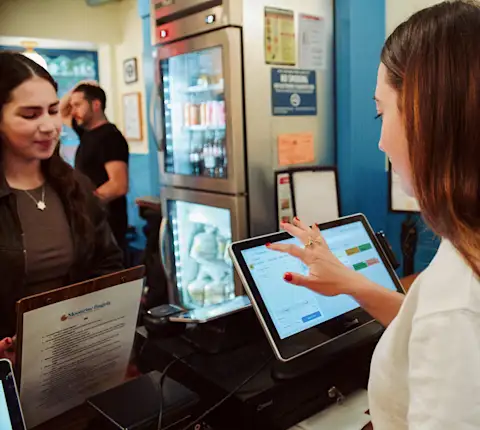
Front of house (FOH) includes everything guests experience: service, ambiance, ordering, and payment.
Back of house (BOH) handles everything behind the scenes: the kitchen, prep, inventory, and administrative work.
Even a flawless kitchen can't recover a shift where the front of house is disorganized, and guests are left waiting.
The 5 Core Components of Restaurant Operations
To run a restaurant successfully, you need to know what you're managing. Most struggling operators are managing five distinct operational areas without a clear framework for any of them.
1. Purchasing and Inventory Management
Sourcing suppliers
Ordering the right quantities
Tracking stock levels
Preventing waste
Managing food costs
Industry benchmarks have found that food costs typically fall between 28–35% of revenue, so what you order and when you order it directly shape your margins. Over-order and you lose cash on product that spoils. Order too little and you lose sales.
Par level is the minimum amount of each ingredient you need on hand to get through a shift or a week. The goal is to hit that number consistently, without over-ordering. Restaurant sustainability practices like tighter inventory control, smarter purchasing, and reducing food waste can also lower operating costs while making better use of the ingredients you already buy. 28% of operators cite food and inventory costs as their single greatest financial strain, making inventory one of the highest-stakes systems in your restaurant.
2. Food Preparation and Kitchen Systems
Standardized recipes
Prep schedules
Portioning
Cooking procedures
Plating consistency
A dish that costs $4.50 with correct portioning but $6.20 when portions vary erodes profit. Recipe cards with exact measurements and prep lists that show what to prepare before service help keep portions and product levels consistent.
3. Service and Guest Experience
Guests don’t see your systems, but your restaurant customer experience reflects how well those systems work. They notice how long it takes to get seated, whether their order comes out right, and how the staff handles errors. Their experience is shaped by greeting, seating, order-taking, food delivery, payment, and complaint resolution.
Getting restaurant reviews starts with the experience you deliver during each visit. Accurate orders, reasonable wait times, attentive service, and effective complaint resolution give satisfied guests more reasons to share positive feedback afterward.
To keep guests coming back, pay attention to table-turn times, server section assignments, and clear communication between FOH and BOH.
4. Staffing, Scheduling, and Labor Management
Hiring
Training
Scheduling
Time tracking
Payroll
Compliance
Overstaffing cuts into margins; understaffing hurts service and leads to team burnout. Forecasting demand before building your schedule helps. The right number of servers for a Friday dinner rush looks very different from a Tuesday lunch.
96% of operators spent more on labor in 2025, with 54% reporting labor cost increases of 21–50%. The average cost to train a new employee is $3,037, which makes retention just as important as hiring.
5. Financial Management and Cost Control
Tracking daily sales
Monitoring food and labor costs
Managing cash flow
Reviewing your profit and loss statement (P&L), which summarizes revenue, costs, and profit over a set period
By the time a month-end P&L flags a food cost problem, you've already lost four weeks of margin you can't recover. Knowing by Thursday that food cost is trending 3% over budget gives you time to adjust purchasing before the weekend.
What Is Restaurant Operations Management?
Restaurant operations management is how you set up and oversee the systems behind daily work so that taking orders, cooking, cleaning, and closing stay consistent from shift to shift. The goal is to build systems that give you room to focus on strategy, growth, and leading your team.
Daily restaurant management operations are the tasks themselves: taking orders, prepping food, running dishes, scheduling shifts, and closing checks. Operations management covers the systems that keep those tasks consistent and profitable, including standard recipes, scheduling tools, inventory tracking, and training protocols that the whole team follows.
The Goal of Operations Management: Systems That Run Without You
With strong operations management, your restaurant performs at a high level whether you are in the building or not. Managers know what to do because procedures are documented and easy to find. Staff execute the work because you have trained them on clear, standard processes instead of one-off habits.
Front of House Operations: Creating Memorable Guest Experiences

Front of house is the visible side of your operation, so slow seating, wrong orders, and messy communication reach guests as poor service. When a server enters an order incorrectly, and the kitchen staff makes it exactly as entered, who failed? The system did. No double-check was built in to catch the mistake before it reached the table.
Service Standards and Guest Flow
Clear service standards show your team exactly how to greet guests, pick up tables, take orders, and close checks. They should set expectations for speed, sequence, and handoffs so the room is under control, resulting in shorter waits and smoother service.
For example, you might require hosts to greet guests within 30 seconds, servers to take drink orders within 3 minutes, and drinks to hit the table within 5 minutes. You can add timing targets for firing appetizers and mains, so dishes land together at the table.
Reservation and Seating Management
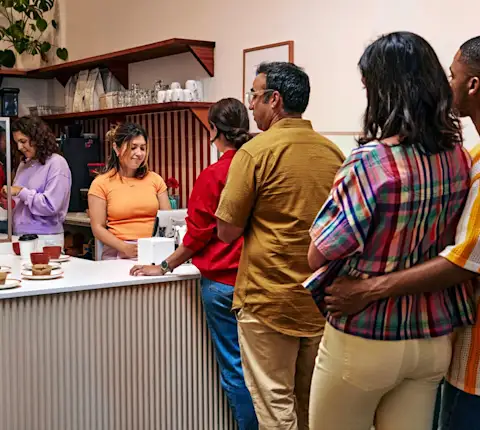
Seating decisions create a chain reaction. If too many covers are on the floor at once and the kitchen backs up, servers fall behind, and guests become frustrated by the wait. Space seating out deliberately, in 15-minute intervals, for example, so the kitchen can work at a sustainable pace.
Apply the same logic to walk-in policies, no-show handling, and section balancing to protect your restaurant's rhythm.
Communication Between FOH and BOH
FOH operations also shape how the floor and the kitchen communicate. Servers need a clear process for entering orders accurately and flagging special requests while creating the ticket. The kitchen needs ways to signal when the next course is ready or when an item is 86'd. This gives FOH the chance to reset expectations with guests before any problems arise.
Back of House Operations: The Engine Room

Most food cost problems start on the line: guessing on portions or working around broken equipment. When a cook eyeballs marinara instead of using a 4-ounce ladle, your food cost on that dish increases whether you change menu prices or not.
Kitchen Workflow and Prep Systems
Strong back-of-house operations start with layout and prep. Stations that are stocked, labeled, and set before service help cooks move without mistakes. Prep lists should spell out exactly what to prepare and how much: chop 2 quarts of diced onions, slice 3 pints of julienned peppers, and prep 15 salmon portions for the grill station.
When every station is loaded with the right product and tools before the rush, cooks can focus on getting plates out instead of hunting for ingredients.
Recipe Standardization and Portion Control
Written recipes with specific measurements protect both flavor and margin. "Add some garlic" is vague; 8 grams of garlic is clear. Scales, scoops, and ladles ensure every cook uses the same amount every time. Plating guides at the pass show exactly what a finished dish should look like, which keeps portions consistent even when staff turns over.
Recipe cost is another factor. If a sandwich is supposed to cost $3.50 in ingredients but portion creep pushes the real cost to $4.80, you're losing margin on every ticket. Over a week of busy shifts, a small portion change on a popular item can wipe out a big share of your profit.
Equipment Maintenance and Safety Compliance
Back of house also depends on equipment that works and food that is handled safely and in line with health codes. Basic maintenance like cleaning hoods, descaling dish machines, and checking gaskets cuts down on surprise failures in the middle of service. Food safety practices such as holding food at the right temperatures, using first-in, first-out (FIFO) rotation, washing hands, and preventing cross-contamination protect guests and lower the risk of violations.
When a grill, fryer, or walk-in fails during service, refund requests are sure to arise. Health code violations can shut down a station or, worse, the entire restaurant. A couple of simple checklists, including one for equipment and one for safety and compliance, give managers a quick way to catch problems before doors open.
8 Best Practices to Improve Your Restaurant Operations
You already know how to run a restaurant. This section focuses on tightening what you have so the business runs cleaner and with fewer surprises.
1. Standardize Everything: Recipes, Procedures, and Service
Inconsistency makes cost control, training, and growth harder than they need to be. One cook's version of a dish should match another's.
Write every recipe with exact measurements and a photo of the finished plate. Use clear steps, specific amounts, and simple tools like ladles, scoops, and scales so anyone on the line can follow them. Build checklists for opening, closing, and cleaning so each shift starts and ends the same way.
Do the same for service. Set a few clear standards for greeting, check-ins, and payment that match the timing targets you use on the floor. When recipes, procedures, and service live in writing instead of in people's heads, you get consistent food, predictable costs, and faster training.
2. Automate What You Can (And Stop Managing Spreadsheets)
Many managers still build schedules by hand, track inventory in spreadsheets, and reconcile invoices line by line. That burns hours every week that a system can handle.
Restaurant operations software can handle scheduling, time clocks, and inventory tracking. Staff request shifts and clock in through one place. Counts from the line feed into the inventory, so usage appears without someone typing numbers late at night.
3. Track Food and Labor Costs in Real Time
Use tools that compare actual food cost to theoretical food cost every day. Theoretical food cost is what you should spend based on recipes and sales. Actual food cost is what you spend based on invoices and usage. Watching the gap between those two figures shows where waste or over-portioning creeps in.
Track labor cost as a percentage of sales by shift, not just across a week. For example, if Friday ticket times average 18 minutes against a 12-minute target while you run one fewer cook than Saturday, and Saturdays hit 11-minute ticket times, the numbers point to a staffing fix. When you can see food and labor in real time, you can change the next day's order or cut a shift early instead of hoping the month balances out.
4. Simplify Your Menu to Reduce Complexity
Every extra menu item adds ingredients to order, store, prep, and track. A big menu slows the kitchen, increases waste, and creates more chances to run out of key items.
Pull sales data and flag dishes that move slowly but use expensive ingredients. If an item sells rarely and has a high food cost, cut it or turn it into a limited-time special instead of a core menu piece. Look for items that share ingredients so one prep batch does more work; for example, one marinara can support several dishes instead of just one.
A properly engineered menu reduces inventory in the walk-in, speeds prep, and brings faster ticket times with fewer out-of-stock moments during a rush.
5. Invest in Training (Not Just Onboarding)
Onboarding shows new hires where things are and how to get through a shift. Training builds skill, confidence, and consistency.
Set up ongoing training for every role. Line cooks can work on knife skills, station setup, and hitting the same doneness every time. Servers can practice upselling, handling complaints, and describing dishes in a way that fits your brand. Managers can learn cost control, scheduling, and coaching.
Make training a regular part of the schedule, not a one-time event. That investment leads to fewer mistakes, higher check averages, and lower turnover. Replacing a single employee costs an average of $3,037 to hire and train, based on TouchBistro's 81 Restaurant Industry Statistics for 2026.
6. Use Data to Make Decisions (Not Gut Feelings)
"I think we need more prep cooks on Fridays" is a guess. "Friday ticket times average 18 minutes against a 12-minute target; Saturdays run 11 minutes with one more cook on the line" uses facts.
Pick a few key numbers to track: average ticket time, table turns, food cost percentage by menu item, and labor cost by time of day. Review them each week and look for patterns instead of one-off bad nights.
With clear numbers, you can staff Fridays like Saturdays if the data supports it, cut a dish that always runs over food cost, or add a server to a lagging time slot. Decisions based on consistent patterns are easier to defend and easier to explain to the team.
7. Build Systems for Multi-Location Consistency
Opening a second location without standardized systems often creates two different restaurants with the same name.
Centralize recipes, Standard Operating Procedures (SOPs), vendor lists, and training materials in one shared place.
Use the same point-of-sale (POS) system at every location so reporting and menu changes match.
Train managers to use the same checklists and uphold the same standards.
DoorDash Commerce Platform helps by syncing menu changes across DoorDash Marketplace and your direct ordering channels. Direct ordering channels are the digital places where guests order straight from your restaurant, such as your branded website or app. Update an item, price, or modifier once, and that change carries across channels and locations.
8. Audit Your Operations Regularly
Even strong systems drift over time. Shortcuts sneak in, new staff copy bad habits, and the approach that worked six months ago may not fit current volume or cost.
Set a monthly operations audit. Walk the line and compare physical inventory to system counts. Review schedules against sales to see where you ran overstaffed or understaffed. Spot-check portions against written recipes to see where the kitchen has started to improvise.
Use these audits to catch small problems before they turn expensive and to keep improving in small steps instead of waiting for a crisis.

Common Restaurant Operations Mistakes (And How to Avoid Them)
Most operators have made these mistakes at some point. The goal is to spot them fast and put better systems in place.
Waiting for the month-end P&L to check costs lets food and labor problems sit for weeks before you see them. If food cost runs 4% over budget for a month, you have already lost thousands of dollars by the time the report lands. Instead, review food and labor at least weekly, and daily during busy periods, so you can adjust orders, portioning, and staffing before the damage piles up.
Keeping everything in your head instead of documenting processes turns you into the bottleneck and the single point of failure. New staff learn by copying what they see, which leads to inconsistent food, uneven service, and slow training whenever you are not on the floor. Set aside two hours a week to write a small set of procedures, recipes, or checklists; over time, you build a playbook the team can follow without you.
Treating all shifts the same when scheduling ignores how different Tuesday lunch and Saturday dinner really are. That approach overstaffs slow shifts and understaffs busy ones, which cuts margin and burns out your team while guests wait longer. Use past sales by day and time to forecast demand for each daypart, then schedule to those targets instead of using one flat template for the whole week.
Ordering inventory on gut feeling instead of data leads to over-ordering items that spoil and under-ordering items that sell out mid-rush. Both outcomes cost you money, whether through waste or missed sales on popular dishes. Track usage for key ingredients, set par levels for each one, and place orders to hit par based on what you used that week.
Ignoring small inefficiencies that “only” shave 1–2% off your numbers lets a slow leak turn into a serious problem. A little extra waste, heavier portions, and one extra person on the floor each shift can add up to 2% waste, 2% over-portioning, and 2% extra labor. That 6% stack on 1 million dollars in revenue is 60,000 dollars gone in a year. Treat those small leaks as real issues, measure them, and fix them early instead of waiting for them to show up in year-end profit.
How DoorDash Commerce Platform Simplifies Restaurant Operations
You already run a successful restaurant operation on DoorDash Marketplace. DoorDash Commerce Platform builds on that success to give you commission-free direct ordering, automated marketing, and operational tools built on the same technology that powers Marketplace.
One system, not eight
Most operators juggle separate tools for online ordering, email marketing, loyalty, and reporting. DoorDash Commerce Platform pulls these into a single system that connects with your existing Marketplace presence. You update your menu, pricing, or hours once, and those changes sync across DoorDash Marketplace and your direct channels, including Online Ordering, your branded website, and your branded mobile app.
The tools that amplify Marketplace success
Online Ordering
Launch a direct ordering channel that you own. Guests order through your website or branded experiences, and you keep commission-free sales while paying only processing fees. Adding Online Ordering can increase sales by up to 8% of your current Marketplace sales (based on internal DoorDash data from January 2025 through May 2025).Automated Email Marketing
Automated Email Marketing keeps guests coming back without manual campaigns. The system sends targeted emails based on guest behavior, such as first orders and lapsed customers.These campaigns boost order frequency by an average of 15% (based on internal DoorDash data from March 2024 through March 2025).
Branded Mobile App
A branded mobile app gives your best guests a fast, familiar way to reorder from your restaurant. The app uses the same technology that powers DoorDash, but looks and feels like your brand. Customers who order through a mobile app are 30% more likely to reorder compared to customers using web ordering channels.Branded Website
A branded website gives you a modern home base for your restaurant online, connected directly to Online Ordering. You can add clear “Order Now” buttons and simple pop-ups to guide guests toward ordering.Cross-Channel Loyalty
Cross-Channel Loyalty gives guests the chance to earn and redeem rewards whether they order through your website, mobile app, in-store, or on DoorDash Marketplace. One program covers every channel, so you turn first-time guests into regulars no matter where they order. Plus, a built-in process helps you automatically turn customers who sign up for your loyalty program on DoorDash into your own direct customers — helping you save time and boost margins over time
Case Study: According to Fishhook Seafood owner Trena Wallace, loyalty customers spent 122% more than non-loyalty customers after the restaurant implemented Cross-Channel Loyalty with DoorDash Commerce Platform, and she says, “The loyalty program has been a game changer. We’re not just serving meals, we’re rewarding returning customers and building lasting relationships.”
Built for busy operators, not developers
DoorDash Commerce Platform is designed so operators do not need technical skills or an in-house developer. Setup takes minutes, and configuration lives in plain-language menus instead of code. You focus on operations and guests while the platform handles the technical side.
The operational unlock
When your direct channels and DoorDash Marketplace run on the same system, you can manage all of your menus, pricing, and guest data in the Merchant Portal instead of separate dashboards. You can see performance by channel and by guest in one view, which makes it easier to spot patterns and make changes.
Launch DoorDash Commerce Platform today and start turning one-time orders into repeat guests.