If you're validating a restaurant concept, building a business plan, or getting ready to talk to a lender, you need a real number — not a generic one. Restaurant startup costs vary enormously by concept, size, and location, so this guide breaks the numbers down by category, giving you the pieces you need to build your own estimate.
This article is for educational purposes only and does not constitute financial or legal advice. Consult a financial advisor or accountant before making budgeting or funding decisions for your restaurant.
Quick Answer
The median cost to open an independent restaurant is around $375,000, but the real range runs much wider depending on your concept, size, and market.
Lease, buildout, and real estate are typically the single biggest cost driver, especially for full-service concepts.
Restaurant startup costs cover everything from kitchen equipment to licenses, technology, and a working capital reserve.
Rent, utilities, labor, food costs, and technology keep costing you every month after you open.
Costs can be meaningfully reduced through concept and format choices, like a second-generation space, leased equipment, or a smaller opening menu.
What's the Average Cost to Open a Restaurant?
According to a RestaurantOwner.com survey of more than 350 independent restaurant owners, the median restaurant startup cost was $375,000. This figure shows up as the most commonly cited median across restaurant industry resources, but no single survey captures every concept, size, and market — your actual number could land well above or below it depending on your specific restaurant.
To put that in context: the National Restaurant Association projects the industry will reach $1.55 trillion in sales in 2026. That's the scale of the industry you're entering, but per-restaurant startup cost still varies enormously by restaurant type, restaurant concept, and market.
What Drives Your Restaurant's Startup Costs
Three variables shape every number in this guide: your restaurant concept and service type, your square footage and seating capacity, and your market and location. Understanding these three helps you self-locate before reading the category breakdown below.
Restaurant Type | Small Footprint | Medium Footprint | Large Footprint |
|---|---|---|---|
Quick-service / fast-casual | $80,000–$175,000 | $175,000–$350,000 | $350,000–$600,000 |
Full-service (casual dining) | $175,000–$400,000 | $400,000–$650,000 | $650,000–$1,000,000+ |
Fine dining | $300,000–$600,000 | $600,000–$1,000,000 | $1,000,000+ |
These ranges are directional planning estimates, not a single verified study — use them alongside the category breakdown below to build your own number.
Restaurant Concept and Service Type
Quick-service and fast-casual concepts generally cost less to open than full-service or fine dining, since counter service needs less seating infrastructure and fewer staff. Service model is the single biggest driver of staffing and buildout complexity — as service gets more formal, you typically need more staff, more seating infrastructure, and a longer buildout timeline.
Square Footage and Seating Capacity
A larger footprint raises rent, equipment scale, and staffing needs together, and it also raises your revenue ceiling. Think of size as a multiplier that touches every cost category in this guide, not a separate expense on its own — keep that in mind as you read the category breakdown below.
Market and Location
Urban markets carry higher rent per square foot and more regulatory complexity. Suburban markets carry lower rent but usually need more marketing investment to build awareness without walk-in traffic. One factor cuts costs regardless of market: a second-generation space, covered in detail in the next section, can meaningfully reduce your buildout cost.
Restaurant Startup Cost Breakdown by Category
These are the one-time costs you'll typically incur before opening day, separate from the monthly operating costs covered later in this guide.
Lease, Buildout, and Real Estate
This is typically the largest and least reversible line item in your restaurant startup costs. A second-generation space — a former restaurant with an existing hood, grease trap, and ventilation — can meaningfully cut buildout cost compared to converting raw retail space, since you're not starting from zero on core infrastructure.
This category also covers costs beyond rent on your commercial space: a security deposit, HVAC and plumbing work tied to code compliance, and dining room furniture, décor, and signage. If you're buying rather than leasing, budget for a down payment, too.
Kitchen Equipment
Your kitchen equipment budget covers the cooking line (ovens, stoves, fryers), refrigeration and freezers, prep stations, and the dishwashers and dish station. Used or leased equipment can reduce the upfront cash you need compared to buying everything new.
Licenses and Permits
Standard permits and licenses include a business license, food service permit (sometimes called a food service license), and certificate of occupancy. A liquor license varies enormously by state and can be one of the highest-variance costs on this list. For jurisdiction-specific requirements, check with your state's licensing authority or the SBA's guide to calculating your startup costs rather than relying on a single national figure.
Utilities
Pre-opening utility connection deposits for gas, electric, and water are a commonly missed one-time cost. This is separate from the ongoing monthly utility expense covered later in this guide — this section only covers the setup and deposit cost.
Technology and POS Systems
A point of sale (POS) system is the operational center of your restaurant, handling everything from payments to inventory management. Choosing one that connects to a delivery marketplace from day one can help you avoid a costly system switch later. DoorDash Marketplace integrates with several leading POS providers, which lets a new restaurant add delivery discovery without new hardware, and makes onboarding to Marketplace straightforward once your systems are in place.
Initial Inventory and Smallwares
Opening food stock and smallwares — plateware, glassware, tableware, utensils, and kitchen tools — are a commonly under-budgeted category. Build these costs into your opening budget rather than treating them as an afterthought once the bigger line items are covered.
Marketing and Branding
Pre-opening marketing basics include a website, a Google Business Profile, and a social media presence to build awareness before you open your doors. Unlike paid ads, joining a delivery marketplace carries no upfront marketing spend — commission is only paid on completed orders, which matters directly if you're watching scarce startup capital.
Staffing and Pre-Opening Labor
Pre-opening training payroll is a frequently overlooked cost — you're often paying salaries, wages, and payroll taxes for a week or more before you generate any revenue. Recruiting takes time, too, so start well before you plan to open, and budget for some overtime during training and your first few weeks of service. For budgeting front-of-house labor, the median hourly wage for food and beverage serving workers was $16.06 as of May 2025, according to the U.S. Bureau of Labor Statistics.
Working Capital Reserve
This category can help determine how profitable your restaurant is in its first year, not just whether it opens. Budget several months of operating expenses as a reserve, kept separate from your one-time startup costs, plus a 10–20% contingency buffer on top of your total startup estimate. Permit delays, construction overruns, and equipment issues are normal — operators who budget for them are the ones who don't run out of cash before opening.
Cost Category | Typical One-Time Range |
|---|---|
Lease, buildout, and real estate | $100,000– $500,000+ |
Kitchen equipment | $40,000–$150,000 |
Licenses and permits | $2,000–$25,000+ (liquor license varies widely) |
Utilities (connection deposits) | $1,000–$5,000 |
Technology and POS systems | $2,000–$15,000 |
Initial inventory and smallwares | $5,000–$25,000 |
Marketing and branding | $2,000–$15,000 |
Staffing and pre-opening labor | $5,000–$30,000 |
Working capital reserve | 3–6 months of operating expenses + 10–20% contingency |
Monthly Operating Costs After You Open
Your costs don't stop at opening day — they change shape. Where the categories above are one-time costs incurred before you open, the categories below repeat every month once you're running.
Monthly operating costs typically include rent or mortgage payments, utilities, labor, food costs, and recurring technology or software subscriptions. Building on the staffing decisions you made when planning your restaurant concept and service type, labor is where that choice shows up every month going forward — as a directional estimate, labor commonly runs roughly 25–30% of revenue and food costs roughly 28–35% of revenue — actual ratios vary by concept, market, and menu pricing.
Monthly Category | Typical Range or Benchmark |
|---|---|
Rent or mortgage payments | Varies by market and square footage |
Utilities | $1,000 - $5,000+ |
Labor | ~25–30% of revenue |
Food costs | ~28–35% of revenue |
Technology and software subscriptions | $200–$1,000+ |
These labor and food-cost percentages are directional planning estimates, not figures from a single verified study
Traditional Restaurant vs. Ghost Kitchen: Comparing Startup Costs
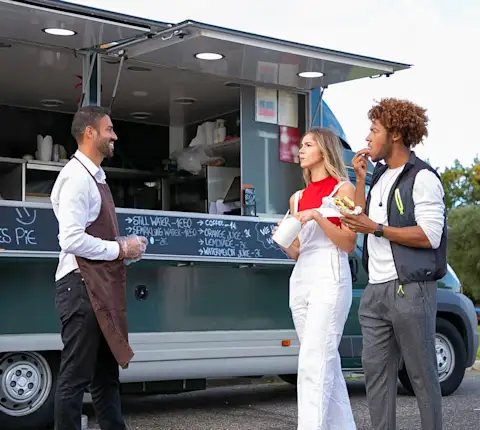
If you're still deciding on format rather than budgeting for one you've already chosen, a delivery-only model is worth a look. A ghost kitchen or virtual restaurant carries a much lower buildout and staffing footprint than a traditional dine-in restaurant, since there's no dining room, front-of-house staff, or seating to build out. A food truck or a series of pop-ups can offer a similar low-cost way to test a restaurant concept before committing to a lease, though neither gives you the built-in customer reach a delivery marketplace listing does.
That lower overhead comes with a tradeoff: delivery-only formats depend more heavily on marketplace visibility, since there's no walk-in traffic to offset a quiet listing. For a full breakdown of the model, costs, and how to launch one, see our guide to delivery-only restaurants.

Ways to Reduce Your Restaurant Startup Costs
If your concept is solid but the number feels out of reach, a few concrete levers can bring your restaurant startup costs down without compromising the concept:
Choose a second-generation space. As covered above, a former restaurant with existing kitchen infrastructure can meaningfully cut your buildout cost
Lease rather than buy higher-cost equipment. This reduces the upfront cash you need for your cooking line, refrigeration, and other kitchen equipment.
Launch with a smaller, tighter menu. A focused opening menu reduces your initial inventory need and simplifies staff training.
Build working capital discipline into your budget from day one. Treat your reserve and contingency buffer as a required cost, not an optional cushion, from the start of your planning.
Grow Your New Restaurant with DoorDash Marketplace
Once you're ready to open, DoorDash Marketplace gives you a way to reach new customers with no upfront marketing spend — commission is paid only on completed orders. In their first month on DoorDash, new merchants receive over 20% of orders from repeat consumers, and by month three, repeat consumers make up nearly 40% of orders (based on internal DoorDash data, Jan 2025–Dec 2025). Listing on Marketplace before opening day means your restaurant can be discoverable to delivery customers from the moment you turn on the lights, and it lays the groundwork for a loyalty program — like DoorDash's Cross-Channel Loyalty — as your customer base grows. It's one line item in your marketing budget that can start generating orders instead of just building awareness.
Get Started with DoorDash Marketplace