Picking one food business idea can feel overwhelming. A food truck, a bakery, and a catering company each need different amounts of money, time, and skill. Some ideas can start as a side hustle in your home kitchen. Others need a lease, staff, and months of planning.
The food industry has room for all of these paths. Your challenge is finding the one that fits your budget and lifestyle. Below, you'll find 15 food business ideas, a simple way to compare them, and the first steps to take once you choose.
This article is for educational purposes only and does not constitute legal or financial advice. Consult an attorney and financial advisor before making business decisions.
TL;DR: How to pick the right food business idea
Startup cost: Some ideas start on a small budget, while a restaurant needs a lease, equipment, and staff.
Home-based fit: A few ideas can run as a side hustle from your home kitchen under your state's cottage food laws.
Delivery fit: Businesses that prepare meals, like restaurants, bakeries, and food trucks, can reach nearby customers through delivery apps.
Time commitment: You can book catering jobs around your schedule, while a coffee shop runs on a daily routine.
Next steps: Use the comparison table below to screen ideas quickly, then read the full list for details on each one.
How to choose the right food business idea for you
Some of these 15 ideas need a lease and a full staff, while others can start in your home kitchen. Compare them side by side to narrow your list before reading the details.
Food business idea | Startup cost | Can you run it from home? | Delivery fit |
|---|---|---|---|
Restaurant | High | No | Strong |
Food truck | Moderate to high | No | Good |
Coffee shop | High | No | Strong |
Bakery | Low to high | Yes, under cottage food laws | Strong |
Ghost kitchen (delivery-only) | Moderate to high | No | Strong |
Catering | Low to moderate | Depends on state | Good |
Personal chef | Low | No, you cook in client homes | None |
Cooking classes | Low | Yes | None |
Meal kit or food subscription box | Moderate | Depends on state | Limited |
Pop-up food concept | Low | No | Limited |
Ice cream shop | High | No | Good |
Specialty food or packaged snacks | Low to moderate | Yes, for some products | None |
Food blog or content creation | Low | Yes | None |
Frozen food service | Moderate | Depends on state | Good |
Home-based (cottage) food business | Low | Yes | Limited |
Startup costs appear as broad tiers. Your total depends on your city, your space, and whether you buy new or used equipment.
Home-based fit comes down to cottage food laws, the state and local rules that let you make certain foods in your home kitchen and sell them. These rules often limit what you can sell, how much you can earn, and how you label products. "Depends on state" marks ideas where the answer changes with your location.
Delivery fit shows how easily nearby customers can order your food through delivery apps. Pick two or three ideas that match your budget and schedule; each entry is outlined below.
15 food business ideas to start
Restaurant
A full restaurant requires the most money and time of any food service business on this list. Before you serve your first meal, you'll need a lease, a commercial kitchen, equipment, and staff. It also tends to take longer to turn a profit than smaller concepts. A detailed restaurant business plan can help you map out costs and funding before you sign a lease.
Food truck
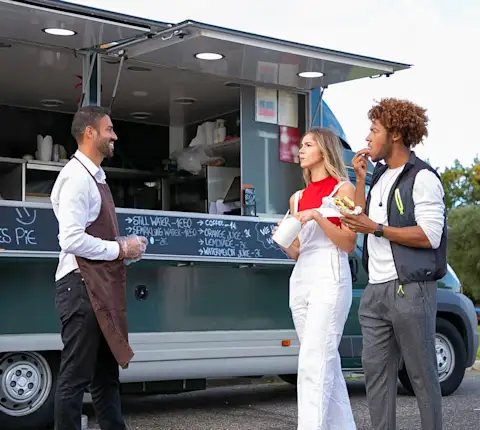
A food truck costs less to start than a full restaurant, and you can take your kitchen wherever customers gather. Farmers markets, festivals, and busy lunch spots are great places to test your menu and learn what sells.
Before your first sale, get clear on possible hurdles. Zoning laws, parking rules, and permits vary widely from city to city, so expect a legal learning curve for your food truck business.
Coffee shop
Coffee shops remain a popular first business thanks to steady daily demand. A morning coffee habit gives customers a built-in reason to return, and regulars can form the core of your sales. Some owners add a juice bar or smoothies to reach customers who don’t drink caffeine. Learning how to open a coffee shop starts with getting clear on your budget, since equipment, rent, and staff costs run high.
Bakery
A bakery can start small, selling baked goods like cupcakes and bread from your home kitchen under cottage food laws. Dietary niches such as gluten-free or allergy-friendly treats tend to have fewer local options, which gives new bakers room to stand out. Winter holidays and cold weather can also bring a seasonal boost, making baking a natural fit among winter food business ideas.
Baking takes long hours, though. Growing past a home setup often requires renting commercial oven space, which raises costs quickly.
Ghost kitchen or virtual restaurant
A ghost kitchen, also called a virtual restaurant, sells food only through delivery and takeout, with no dining room. Delivery-only restaurants can rent space in a shared commercial kitchen instead of building a storefront, so costs fall in the moderate to high range.
With no walk-in traffic, your business depends entirely on customers finding you through delivery apps and online ordering. A listing on DoorDash Marketplace, the DoorDash app where customers browse and order from local businesses, helps nearby diners discover a brand with no storefront.
Catering
A catering business earns its money through events like weddings, office lunches, and family parties. Start with small gatherings, then take on larger jobs as your catering company grows. Check whether your state lets you cater from home or requires a commercial kitchen.
Event catering comes with pressure. Every order has a fixed date and time with no room for delay, and each client may want a custom menu.
Personal chef
A personal chef cooks in clients' homes, often preparing a week of meals or helping busy families with meal planning. Regular clients can book you weekly, which creates steady repeat income. Startup costs are low because you cook in the client's kitchen. Since you work inside someone else's home, you'll often need a food safety certification and liability insurance before your first booking.
Cooking classes
Cooking classes come in two formats: live classes in person or online, and recorded courses students take at their own pace. This idea scales well because you can teach one class to many students at once, and startup costs are low. Consumer interest is strong, too, with 50% of consumers interested in cooking classes at a restaurant (2025 State of the Restaurant Industry report, National Restaurant Association).
Visibility is the main challenge. Both formats usually require teaching on camera or to a live group, which feels uncomfortable for some people.
Meal kit or food subscription box
A meal kit business sends customers pre-portioned ingredients and recipes on a regular schedule. As an online food business, it runs on subscriptions, which bring recurring revenue and make monthly income easier to predict.
Shipping is the hard part. Perishable ingredients need cold-chain packaging, insulated boxes and cold packs that hold food at safe temperatures in transit. That adds cost and complexity a shelf-stable product wouldn't have.
Pop-up food concept
A pop-up runs for a short time in a borrowed space, such as a craft beer taproom, a farmers market, or a restaurant on its day off. You can test a menu with paying customers before you commit to a lease, and startup costs are low. Pop-ups also suit unique food business ideas, like a one-night tasting menu.
Each pop-up still needs its own permit from your local health department. Prep and storage space is also limited compared to a permanent kitchen.
Ice cream shop
An ice cream shop offers a flexible menu, from scoops and pints to ice cream cakes and seasonal flavors. Startup costs run high because you need a batch freezer and reliable cold storage. Sales often slow in colder months, so plan your budget around a busy summer and a slower winter.
Specialty food or packaged snacks
This idea centers on a single packaged product, like spice blends, granola, hot sauce, or jellies, sold online or in stores. The day-to-day is simpler than running a full kitchen that serves meals, and some shelf-stable products may qualify under cottage food laws.
Standing out is the biggest challenge. Specialty food stores and grocery shelves already carry established brands, so landing shelf space takes steady outreach.
Food blog or content creation
With a food blog or social media channel, you share recipes, reviews, or cooking tips online. It's one of the easy food business ideas to start as a side hustle, with very low startup costs. Your audience can also become a marketing channel for another food business down the road.
Income builds slowly. You'll need to post consistently and grow a large audience first. After that, ads, sponsorships, and affiliate links (commissions on products you recommend) can start to pay.
Frozen food service
A frozen food service sells prepared meals, soups, or baked goods that customers keep in the freezer. Freezing extends shelf life, which simplifies inventory and cuts down on waste. You can sell through local pickup, a food delivery service, or shipping. Commercial freezers and steady temperature control in transit add costs that a shelf-stable product avoids.
Home-based (cottage) food business
Under cottage food laws, you can make and sell certain foods from your home kitchen. These laws usually cover shelf-stable items like jams, cookies, and bread. With low startup costs, this is one of the most practical home food business ideas and low-cost small food business ideas for testing recipes.
Rules on what you can sell, how much you can earn, and how you label products vary by state and sometimes by city. Review the U.S. Small Business Administration's licensing guidance and check with your local health department before you sell.
How to start a food business
Research and validate your idea
Before you spend money, find out whether people near you want what you plan to sell. Look at similar businesses in your area, note what they charge, and look for gaps, like a missing cuisine or no late-night options.
Market research can also be hands-on. Selling samples at farmers' markets or a pop-up lets you test recipes and prices with paying customers.
Apply for licenses and permits
Requirements vary by state, city, and across types of food businesses. The basics usually include a general business license, a health department permit, and a tax ID number. You and your staff may also need food handler certificates, which show you've trained in safe food prep and storage.
Packaged products may also need to meet U.S. Food and Drug Administration (FDA) labeling rules. The U.S. Small Business Administration (SBA) offers a guide to federal, state, and local licenses to help you plan.
Plan your location, equipment, and budget
Where you cook depends on your idea. A cottage food business can run from your home kitchen, and caterers or food trucks may rent time in a shared commercial kitchen. Restaurants and coffee shops need a lease.
Next, list every startup cost, including equipment, ingredients, permits, insurance, and packaging. You'll also need a way to take payments, like a point-of-sale (POS) system that records sales at checkout. Set aside cash to cover several months of expenses, since new businesses often take time to break even.
Build your brand
Your brand is how customers recognize and remember you. Choose a clear name, a simple logo, and a menu that reflects your style. Take good photos of your food, since those images will appear on your website, social media, and any delivery apps you join. Keep your look and voice consistent everywhere customers see you.
Reach your first customers
Once you're ready to sell, think about where your first customers will come from. Social media, farmers' markets, and word of mouth? Online ordering on your own website lets regulars order directly from you. For businesses that prepare meals, delivery apps can also help nearby customers discover you.

How delivery fits into your food business from day one
When you first open, nobody knows your name yet, so customers won't search for you. On DoorDash Marketplace, they can still find you while browsing. Over 55% of first-time orders on DoorDash come from consumers who were browsing rather than searching for a specific restaurant (2026 DoorDash Restaurant Industry Trends Report). That gives your brand-new listing a fair chance at new orders.
Those first orders can grow into a base of regulars. New merchants receive over 20% of orders from repeat consumers in their first month on DoorDash (based on internal DoorDash data, Jan 2025 to Dec 2025). By month three, that number can grow to nearly 40%. Dashers deliver orders through the DoorDash platform, so you can focus on cooking instead of hiring drivers.
Turn your food business idea into reality with DoorDash Marketplace
Whichever idea you choose, finding customers comes next. Once you pick one that involves preparing and selling food, a DoorDash Marketplace listing can help nearby customers order from you as soon as you open.
Get Started with DoorDash Marketplace