Online ordering system for restaurants
Commission-free ordering so you
can keep more of what you earn
Let customers order directly from your restaurant website, Google page, or social media, powered by DoorDash.
Works with 40+ POS systems • No new hardware required • Live in less than a day • Delivery powered by Dashers


Earn more when customers order
through your digital ordering channels
Keep your restaurant operations running smoothly and profitably. Accept orders directly from your website, Google page, and social media.

Customers order from you, directly
Your online menu is right where your customers already are: your restaurant website, Google page, social media, or a QR code in-store. Every direct order is commission-free so you keep more of every sale.
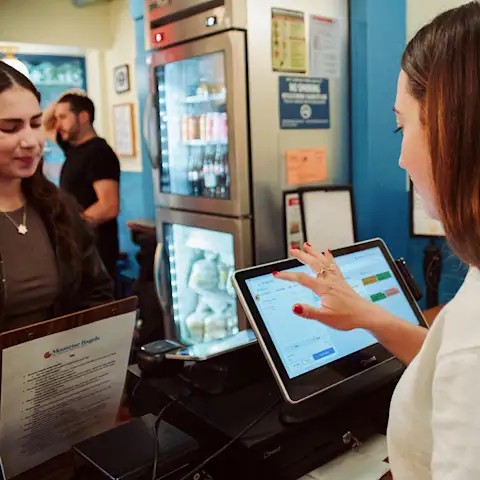
Orders go straight to your POS system
Every order flows into your existing point of sale through built-in integrations. Your online menu syncs automatically from your DoorDash store — no manual entry, no starting from scratch. A dedicated setup specialist gets you live in less than a day.

More margin for your restaurant
Dashers handle fulfillment so your team stays focused on the food. You keep more of every sale while still winning new customers on third-party platforms.
Try the ordering experience your customers will see
Build stronger customer relationships
You already use Marketplace to reach new customers. With Online Ordering, you can turn them into regulars, commission-free.
WHAT YOU HAVE TODAY
DoorDash Marketplace
15–30% commission per order
Like most third-party platforms, you pay DoorDash commissions to reach customers that are ready to buy.
Customers order on DoorDash
They discover you and place orders through the DoorDash mobile app.
DoorDash branded checkout
Your menu items get discovered by customers already browsing restaurants that offer delivery service
WHAT YOU WILL GAIN
Online Ordering
0% commission on direct orders
Orders from your own digital ordering channels come with zero commission fees.
Customers order from you, directly
Get orders through your restaurant website, social media, or Google.
Your brand at every step
A branded ordering experience that keeps your restaurant front and center and strengthens customer relationships.

$80k
in gross sales
From direct orders in their first full quarter on the DoorDash Commerce Platform alone (based on internal data, Jul to Sep 2025)

$60k+
in gross sales
From Online Ordering in Q3 of 2025 (based on internal data fromJul to Sep 2025)
D'bos
Julian Boyd • Co-Owner

17%
increase in monthly order volume
Based on internal data after first 3 months of Online Ordering adoption.
"We used to use another platform. But now that we're using DoorDash's online ordering platform, things are a lot easier and a lot smoother for our operation."

— Christian Ferrell, General Manager, Dulan's on Crenshaw“Online Ordering helps us appear like we have our own ecommerce platform, with our own branding. Our website gets hundreds of hits every day, and it turns those visitors into actual sales. That's having a huge impact on our business.”
Works with the POS system you already use
DoorDash integrations send orders directly into the POS system your team already uses. No new hardware, no disruption to your ordering experience.
Works with 40+ POS systems:


Online Ordering is part of DoorDash Commerce Platform
Everything you need to grow your direct orders, own your customer relationships, and run your business more efficiently.
Online Ordering
Accept direct orders from your restaurant website, Google, and social media with $0 commission fees. Earn more revenue alongside what you already earn on third-party platforms.
Guest experience management
Automatic review responses and reputation tools that help you earn more insightful reviews, build trust with new customers, and strengthen relationships with regulars.
Learn moreCross-Channel Loyalty Program
Reward customers across all your ordering channels to drive repeat business and bring them back.
Learn moreBranded website
A fully branded checkout and ordering experience that keeps your restaurant front and center, reduces abandoned orders, and turns website visitors into paying customers.
Learn moreBranded mobile app
Your own app, powered by DoorDash technology so your brand lives in your customers' pockets and keeps them coming back directly to you.
Learn moreCustomizable marketing tools
Use your dashboard to access customer data and send customizable, automatic email marketing and marketing campaigns to drive repeat business.
Learn moreEverything you need to grow
- 0% commission on direct orders
- Menus sync with DoorDash Marketplace
- Standard payment processing fees apply
- DoorDash delivery network
- Customers pay delivery fees
- Live order tracking
- No cancellation penalties
- Customer support for deliveries
Learn more about online ordering for restaurants
Resources to help you get more from every order.

How to Set Up Online Ordering Without Losing Your Brand
Set up online ordering for your restaurant while keeping personal touch — your hospitality and branding — strong across your channels.
Read article
How to Choose an Online Ordering Platform
Learn how to choose an online ordering provider & restaurant marketing platform that will help your restaurant's specific goals.
Watch now
Online Ordering and Restaurant Marketing Platform Worksheet
A simple, structured worksheet to help you think through your goals and understand what you need from a marketing platform.
Download worksheetFrequently Asked Questions
Online Ordering is available to restaurants with an active DoorDash store. If you already sell on Marketplace, you can turn it on from your Merchant Portal and start taking orders on your own website — no new hardware, live within hours. If you're wondering how to create online ordering for restaurant operations, this setup process is a great place to start.
Our online ordering solution lets you accept direct orders from your own website (Effectively turning it into an online ordering website), social profiles, and even straight from Google. Orders sync with your POS system, and delivery orders are fulfilled by DoorDash logistics.
Online Ordering by DoorDash has no monthly fees or commission-based fees. Unlike orders from third-party platforms, all orders are commission-free — so restaurant owners keep all revenue from food orders placed through your online ordering platform, takeout, and delivery alike. The only charge is payment processing fees like the ones you pay on dine-in orders. Customers pay delivery fees on delivery orders.
Yes. DoorDash Online Ordering integrates with your existing restaurant operations. With integrations across 30+ leading point of sale (POS) providers, your menu items and real-time availability stay synced across every channel, with order management in a single dashboard.
If you're already an active DoorDash merchant, you can activate Online Ordering in minutes through your Merchant Portal. Most restaurant owners are live and taking direct orders in less than 24 hours.
A branded checkout, special offers, loyalty rewards, and email marketing keep customers coming back. The smoother the online ordering process, the more repeat business you build — and the more direct sales you drive over time.
When evaluating an online ordering platform, look for $0 commission, direct POS integrations, and the ability to own your customer data. In addition to basic ordering features, top online ordering software also include features like a Loyalty Program and a restaurant online ordering app, offering an enhanced ordering experience to your most loyal customers on your Branded App.
For direct orders on your own website and other channels, DoorDash Online Ordering is a commission-free service — effectively free online ordering, and one of the most cost-effective ways to increase profit on direct orders. You offer customers both delivery service and takeout at no extra cost, paying only the standard credit card processing fee.
Yes, DoorDash Online Ordering System allows customers to order for pickup or get it delivered. Dashers handle deliveries, but the customer pays for it.
DoorDash Online Ordering is built for a seamless ordering process for delivery and pickup orders. Fast-casual and quick-service restaurants can use it to take dine-in orders too, but that isn't its main use case.

Get commission-free ordering on your own channels
Add Online Ordering to your website, Google Business Profile, or social channels and start growing on your own terms.
Talk to a growth expert