
You post on Instagram when you remember. Every few weeks, you send an email blast to your whole list. And you have no idea if any of it brings in a single order.
If that sounds familiar, you're in good company. Most restaurant owners treat content marketing as social media and nothing else. But social media is one piece of a much bigger system.
Content marketing for restaurants covers your website, your email, your customer reviews, and your social posts. When these work together, they turn first-time browsers into regulars who order again and again.
This guide focuses on content that drives orders and repeat visits. Likes and followers are easy to count, but they don't pay the bills.
Here's what you'll learn:
How to build a content strategy that fits your restaurant
Which types of content to prioritize first
How to keep a content calendar without a marketing team
How to measure results in orders, not likes
TL;DR
Content marketing for restaurants covers your website, email, reviews, and social media, not just social posts.
Build a content strategy before you create anything: know who you're reaching, what you want them to do, where, and how often.
Prioritize the three foundational content types first: your website and blog, email marketing, and social media.
Plan your posts in advance with a content calendar, so you post consistently instead of scrambling each day.
Repurpose one piece of content across many channels to save time when you have no marketing team or a light headcount.
Measure orders, email signups, and repeat visits, not likes.
The single most important move: connect every piece of content to a channel you own, so the customers you attract turn into regulars you can communicate with.
What Is Content Marketing for Restaurants?
Content marketing is creating and sharing useful content that brings in new customers and keeps current ones coming back. That content lives across your website, your email, your social media, and review sites like Yelp and Google.
Most owners picture Instagram when they hear "content marketing." But your menu descriptions, your email sequences, your review responses, and your blog posts all count too.
Content marketing brings in over 3x as many leads (people who show interest in your restaurant) as traditional marketing, and it costs 62% less (Demand Metric). For a restaurant watching every dollar, that difference is hard to ignore.
Why Content Works Better Than Ads for Restaurants
Restaurants start with an edge. The food, the people, and the room are interesting on their own. A software company, for example, has to manufacture appeal. You just have to show what already happens in your kitchen.
Content also builds trust, and trust turns a browser into a diner. Seventy percent of people prefer learning about a business through content rather than traditional ads (Demand Metric).
For a small restaurant without a big ad budget, content is the highest-return marketing channel you have. Restaurants with a documented content strategy are 3.5x more likely to report success than those without one (Content Marketing Institute, 2026).
How Customers Find and Choose Restaurants in 2026
When choosing where to eat, 51% of diners use Google search, 37% use delivery apps, and 62% turn to friends and family (DoorDash Restaurant Reservations and Operations Trends Report 2026). Another 22% have used AI tools like ChatGPT or Google Gemini to help choose a restaurant.
Your content reaches all three. Your Google Business Profile (GBP), your restaurant's listing in Google Maps and local search, helps new customers discover you. Your website menu descriptions, your review responses, and your social media posts do the same.
Menu copy alone influences orders: 93% of consumers say detailed menu descriptions affected what they ordered in the past six months (DoorDash Restaurant Reservations and Operations Trends Report 2026).
Build Your Content Strategy Before You Create Anything
Before you make anything, sort out four things: who you want to reach, what you want them to do, where you'll post, and how often.
Who You're Talking To
Don't try to reach everyone in town. Think about the customers you want more of, like the family that comes in every Friday or the office workers who grab lunch nearby.
What You Want Them to Do
Every post should ask people to do one of three things: come in, place an order, or give you their email. A photo of tonight's special can bring in an order. A behind-the-scenes video can make someone curious enough to visit. A signup form captures an email address so you can reach them later.
Where You'll Post
You don't need to be everywhere. Pick two or three places and do them well. For most restaurants, that's Instagram, email, and a Google Business Profile (GBP), which is your listing on Google Maps and local search. Add TikTok later if you have time to film.
How Often
Two posts a week, every week, works better than a daily streak that lasts two weeks. Pick a schedule you can keep up with when you're busy, not just when things are slow.
6 Types of Restaurant Content That Actually Drive Orders
You don't need to do all six of these. Start with the first three: your website and blog, email, and social media. The other three (reviews, storytelling, and user-generated content) build on top of them once the basics are running.
Your Website and Blog
Your website is the one channel you own. On Instagram or TikTok, the platform decides who sees your posts, and that can change anytime. Your website is yours, and it works the same way no matter what the social media platforms do.
Google sends people to your website when they search for you. Your menu turns those visitors into orders. And it's the place where people sign up for your email list.
A blog helps you show up when people search things like "best brunch in [your city]." Restaurants that blog regularly bring in 55% more website traffic than those that don't (HubSpot, 2025).
Here's where DoorDash Commerce Platform fits in. Its branded website and Online Ordering run on the same technology as DoorDash Marketplace, so your menu updates sync on their own, and anyone reading your blog can place an order right there on your site. Adding Online Ordering can increase sales by up to 8% of your current Marketplace sales (based on internal DoorDash data from Jan 2025 through May 2025).
Email Marketing
Email brings in more money per dollar than any other channel, returning $36 to $42 for every $1 you spend (Litmus State of Email, 2025). Most restaurants either don't email at all or send the same message to everyone on their list.
Start by collecting emails everywhere you can: your website, your online ordering, and in the restaurant. Then split your list into three groups and send each one something that fits:
New customers: a welcome email, maybe with a small offer for their next order.
Regulars: your weekly specials and new menu items.
Lapsed customers: a "we miss you" email with a reason to come back.
DoorDash Commerce Platform can send these emails for you. Its automated email marketing goes out on its own, based on what each customer does. Automated email boosts order frequency by an average of 15% among new and returning customers (based on internal DoorDash data from March 2024 through March 2025).
Social Media
This is what most owners think of first when they hear content marketing. Social media marketing is important, but it's one channel, not the whole plan.
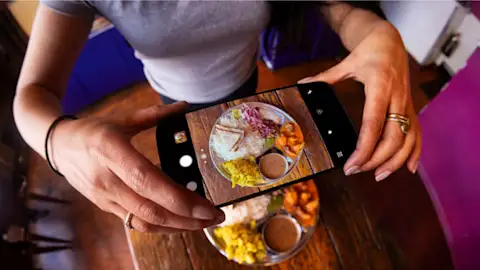
Pick one or two platforms where your customers already are, like Instagram and Facebook. Post three or four times a week and mix up what you share: food photos, behind-the-scenes clips, customer posts, and time-sensitive offers.
According to the National Restaurant Association's State of the Restaurant Industry 2025 report, 74% of diners say social media is a good way to learn about foods they haven't tried before. It’s a great way to spread your content and point people back to the channels you own, like your website and email list.
Customer Reviews and Testimonials
Reviews are content too, and people trust them more than anything you say about yourself. One extra star on Yelp is linked to a 5 to 9% jump in revenue (Harvard Business School).
Here's how to bring in more reviews:
Ask at the right time, right after someone has a good experience.
Make it easy, with a QR code on the receipt or a text link after delivery.
Respond to every review within a day or two, good or bad.
Your responses are content as well. When people see you replying, it tells them, and Google, that you're paying attention and you care.
DoorDash Commerce Platform’s Guest Experience Management pulls all your reviews into one place and asks happy customers to leave a review for you.
Behind-the-Scenes and Storytelling Content
This is one area where restaurants have it easier than most businesses. People want to see the cook who makes their food, where your ingredients come from, and how a dish they love comes together.
That kind of restaurant promotion content builds a connection, and connection is what turns a one-time customer into a regular.
A few things you can make:
Prep videos: a 30-second clip of a dish being made.
Chef interviews: a short Q&A with the person behind the food.
Origin stories: how a menu item came to be, or the story behind a family recipe.
Staff spotlights: a quick introduction to the people who work for you.
You don't need a script or fancy gear. A phone and a few minutes during prep is enough to start.
User-Generated Content
User-generated content, or UGC, is the photos, reviews, and posts your customers make about your restaurant. It's free, it feels real, and people trust it: when potential diners see others enjoying your food, they're more likely to order too.
Here's how to bring in more of it:
Make it photo-worthy: plate your signature dishes so they stand out, or add a corner of the restaurant people want to take pictures in.
Run a contest: ask customers to tag you for a chance to win a free meal.
Repost what they share: put customer photos on your own social media so others see them.
UGC does double work. It's content you didn't have to make, and it shows new customers that real people like your food.
How to Create a Restaurant Content Calendar
A content calendar is a simple schedule of what you'll post and when. Everything is planned in advance, so you're not deciding what to post at the last minute.
Here's how to build one:
Start with four weeks. Plan a month at a time so you can see the whole picture.
Give each day a theme. For example: Monday a food photo, Wednesday a behind-the-scenes clip, Friday a customer feature.
Batch your work. Set aside two or three hours once a week to make everything at once.
Schedule ahead. Use a free scheduling tool to line up your social media posts so they go out on their own.
Mix two kinds of content on your calendar. First, timely posts like seasonal menu changes, local events, and holidays. Second, evergreen content like menu highlights and origin stories that you can reuse anytime.
How to Repurpose Content When You Don't Have a Marketing Team
Most restaurant owners don't have a marketing person, let alone a team. So the answer isn't making more content. It's getting more out of what you already have.
One video from the kitchen can become:
An Instagram Reel
A TikTok post
A short embed on your website blog
A feature in your email newsletter
A post on your Google Business Profile
Use reviews in the same way, as graphics for social media, quotes in your next email, and testimonials on your website. According to the DoorDash Restaurant Reservations and Operations Trends Report 2026, 83% of operators believe connected systems would improve their profitability. The same idea applies to your content.
Measuring Content Marketing: Track Orders, Not Likes
Likes, followers, and views tell you people saw your content. They don't tell you if anyone ordered, so track these five numbers tied to your business.
Website traffic from content. How many people your posts and blog send to your site. You can see this free in Google Analytics.
Online orders per week. Your direct orders plus your Marketplace orders. A steady climb is a good sign your content is working.
Email list growth. How many new signups you add each week. Even 5 to 10 a week adds up over a year.
Repeat customer rate. The share of customers who order more than once. Higher is better, and repeat customers cost you nothing to bring back.
Reviews and rating. How many reviews you bring in and your average score. Aim for a steady flow of new ones and a rating above four stars.
These are your KPIs, or key performance indicators, which are the numbers that show whether your content is successful.
Only 27% of operators can say for sure which campaigns led to repeat customers (DoorDash Restaurant Reservations and Operations Trends Report 2026). DoorDash Commerce Platform shows you which customers came from where, so you can see what's working. Your own direct sales can add up to $7,500 in the first six months (based on internal DoorDash data as of June 2025).
Common Content Marketing Mistakes Restaurants Make
A few mistakes come up again and again. Here's what to avoid.
Treating social media as your whole strategy. Social media is one channel. Without a website, an email list, and reviews, you're renting your audience on a platform you don't control.
Posting without a goal. Every post should point to one of three actions: visit, order, or sign up. A post that does none of those isn't doing anything for you.
Chasing trends instead of building a system. A viral TikTok feels great, but you can't count on doing it twice. A weekly email that brings in 15% more orders is something you can build on (based on internal DoorDash data from March 2024 through March 2025).
Measuring likes instead of orders. Followers and likes don't pay your rent. Pick one or two numbers tied to revenue, like online orders or email signups, and track those.
Turn Content Into Customers, Starting Today
You're already bringing in new customers. The goal now is turning them into regulars who order again.
DoorDash Commerce Platform connects the content you make to the channels that bring people back:
Online Ordering on your branded website, commission-free.
Automated email marketing that runs on its own.
Cross-Channel Loyalty that rewards customers everywhere they order.
What that adds up to:
Online Ordering can increase sales by up to 8% of your current Marketplace sales.*
Automated email marketing boosts order frequency by an average of 15% among new and returning customers.**
Your own direct sales can add up to $7,500 in the first six months.***
*Based on internal DoorDash data from Jan 2025 through May 2025
**Based on internal DoorDash data from March 2024 through March 2025
***Based on internal DoorDash data as of June 2025
Ready to turn your content into orders?