Fewer shoppers walk through the door while online shopping keeps growing. E-commerce accounted for 17.1% of total U.S. retail sales (seasonally adjusted) in Q2 2026, according to the U.S. Census Bureau Quarterly Retail E-Commerce Sales report (CB26-133, Aug. 18, 2026). Most retail spending still happens outside e-commerce, so brick-and-mortar stores need tactics for both channels. The National Retail Federation’s 2026 retail sales forecast (Mar. 19, 2026) projects 4.4% growth in core retail sales this year. Here’s how to increase sales in retail with 13 tactics organized around four drivers: foot traffic, conversion rates, average transaction value, and repeat purchases.
13 ways to increase retail sales at a glance
Retail sales grow through four drivers: foot traffic, conversion rates, average transaction value, and repeat purchases.
To bring in more shoppers, improve your online visibility, lead with your local story, partner with local creators on social media, host in-store events, and offer same-day delivery.
To help more browsers buy, refine your store layout, invest in staff training, keep best-sellers in stock, and offer flexible payment options.
To raise average transaction value, use upselling, cross-selling, and bundles, and plan targeted promotions instead of blanket discounts.
To build customer loyalty, run a simple loyalty program and stay in touch through email marketing after the sale.
The most important step is to measure your baseline for each driver and fix the weakest one first.
What drives retail sales? The four levers to pull
Retail sales are the revenue a store earns from selling goods to customers over a set period. Breaking sales into four drivers gives owners with limited time and budget a way to diagnose problems before spending money on fixes.
For any period, sales equal the number of shoppers × conversion rate (the share of visitors who buy) × average transaction value (the average amount per purchase, also called average order value). The fourth driver, repeat purchases, measures how often customers come back to buy again.
Your point of sale (POS) system, the software that records transactions and tracks inventory, supplies most of the retail analytics in the table below.
Driver | What it tells you | How to track it | Tactics in this guide |
|---|---|---|---|
Foot traffic | How many shoppers visit your store or website | Door counter, website visitors | 1–5 |
Conversion rate | Share of visitors who buy | POS transaction count ÷ visitors | 6–9 |
Average transaction value | Average amount spent per purchase | POS sales ÷ number of transactions | 10–11 |
Repeat purchases | Share of customers who come back to buy | Loyalty program or POS customer history | 12–13 |
How to bring more shoppers to your store
None of the other drivers matter if shoppers never find your retail business. The five tactics below reach people walking past your door and people searching from home.
1. Make your store easy to find online
Claim your Google Business Profile and keep it complete with current hours, clear photos, and accurate product categories. Add your city and neighborhood names to your website’s page titles and product pages so search engines match your store with nearby searches. Reply to every review promptly and personally, whether it praises your store or raises a complaint. These digital marketing basics require time more than budget. According to BrightLocal’s Local Consumer Review Survey 2026 (Feb. 11, 2026), 97% of consumers read reviews for local businesses.
2. Lead with your local story
Big-box chains often can’t claim roots in your neighborhood. Share your origin story on in-store signage, dedicate a shelf to local makers, and team up with neighboring shops on joint promotions. These touches give shoppers an emotional connection to your store. Demand for small businesses is strong: the American Express, 2025 Shop Small Impact Study, conducted by Teneo from September to October 2025 and released Nov. 12, 2025, found that 86% of consumers were likely to shop at small businesses, in person or online, during the 2025 holiday season.
3. Turn social media and local creators into a traffic source
Choose social media formats a small team can sustain, such as short product videos, behind-the-scenes posts, and “new in store” updates. Partner with local creators, who often reach more people in your neighborhood than your store’s own accounts. The same American Express study found that 82% of small business owners surveyed have seen sales spike when content creators post about them. Focus on one or two platforms and post on a consistent schedule instead of spreading your team across five networks.
4. Host in-store events and workshops
In-store events give shoppers a reason to visit that online-only retailers can’t offer. Match the event to your category: product demos for a beauty supply store, classes for an arts and crafts shop, author readings for a bookstore, or setup clinics for an electronics retailer. Pair each event with a small attendees-only offer and a simple way to collect contact information for follow-up.
5. Reach nearby shoppers through a delivery marketplace
Bad weather, a busy schedule, or no car can keep local shoppers home on any given day. Offering same-day delivery (orders delivered to the customer the day they’re placed) through a delivery marketplace lets your store sell to them without changing how it runs.
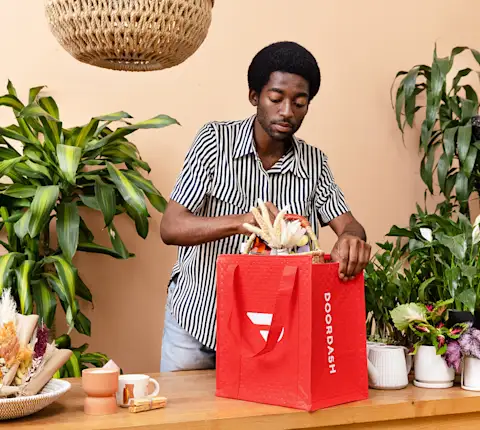
Retail delivery on DoorDash Marketplace follows a simple flow: your store lists its products, customers order in the DoorDash app, and your staff packs each order. Orders go out for delivery by Dashers through DoorDash, or customers pick them up in store. You don’t need to hire delivery drivers, and your store keeps its own branding and control of its catalog and pricing. To qualify, a retail store needs at least 250 products, each with a photo, description, and price.
Delivery can also expand your customer base: 85% of DoorDash consumers are incremental to merchants’ existing businesses*.
*Third-party data analysis via YipitData fiscal year 2024 Transactions across US on-demand delivery, including Restaurant and non-restaurant categories.
Delivery also suits impulse shopping. Lakesha Lymon-Ellerbee, Owner of Kesha Beauty Supply, says beauty shopping is often an impulse buy. With delivery, a shopper can order a product and get it in about 30 minutes — what she calls “extreme convenience.”
How to turn more browsers into buyers
Shoppers who walk in and leave empty-handed represent lost in-store sales. Small changes to your space, team, shelves, and register can lift conversion rates without a single new visitor.
6. Design your layout and displays to sell
Watch how shoppers move through your store, where they pause, and which aisles they pass by. Let that customer behavior guide your store layout and product placement. Put best-sellers and high-margin items at eye level and on end caps. Group complementary products, such as phone cases beside chargers or notebooks beside pens. Refresh window displays and front tables regularly so repeat visitors spot new arrivals as soon as they walk in.
7. Train your team to help shoppers decide
Helpful sales associates guide shoppers toward a purchase without pressure. Build staff training around product knowledge, greeting every shopper, and asking one or two questions about what they need. Associates who understand a shopper’s goal can offer confident product recommendations. Check your sales data for your busiest hours and schedule your strongest team members then. Frame employee training as coaching that builds your team’s confidence, and keep it separate from sales quotas.
8. Use your sales data to keep best-sellers in stock
An empty shelf costs you a sale. Your POS system shows top sellers, slow movers, sales by hour, and which items are running low. Review that data weekly to plan reorders before stockouts occur. Set up back-in-stock alerts so customers know when popular items return.
9. Make checkout fast and flexible
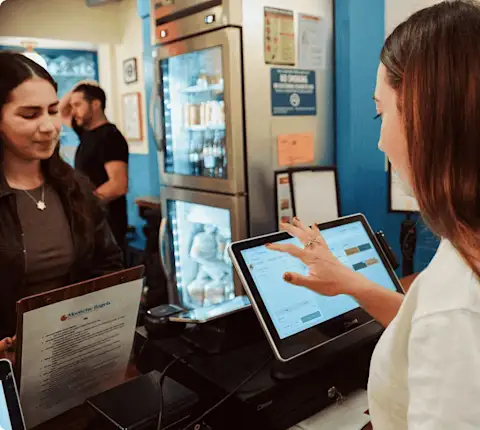
Accept the payment methods shoppers expect, including tap-to-pay cards and digital wallets. During peak hours, use a mobile checkout device to ring up purchases away from the counter and shorten lines. Keep the counter clear so the sales process moves quickly. Long lines and limited payment options give shoppers avoidable reasons to walk out.
How to raise the value of every sale
Selling a little more to each buyer raises your average transaction value. It’s often the lowest-cost way to increase sales because it doesn’t require new shoppers.
10. Upsell, cross-sell, and bundle
Three sales techniques raise the value of each purchase. Upselling suggests a higher-end version of the product a shopper wants. Cross-selling suggests a related item, such as grip tape with a new tennis racket. Bundling groups related items at a combined price, such as a beauty starter kit or a back-to-school stationery set. Use the checkout counter for small, relevant add-ons and gift-ready sets that encourage impulse buys.
11. Price and promote with a plan
Blanket discounts reduce your margin, even on items shoppers would buy at full price. Use targeted promotions instead:
Spend-threshold offers, such as a free gift with purchases over a set amount
Clearance markdowns or short flash sales on slow movers flagged in your sales data
A simple promotion calendar built around your store’s busy and slow periods, using customer data from your POS
Plan peak-season promotions early, from holiday sales tactics and a Black Friday checklist to holiday-ready last-mile delivery.

How to bring customers back
A first sale is only the start. Small stores build steady sales by bringing one-time shoppers back as regulars.
12. Reward repeat customers with a simple loyalty program
Choose a format shoppers understand at the register, such as stamp or points cards, spend-based perks, or members-only early access to sales. Connect your rewards program to your POS so it runs without extra work at checkout. Add a referral reward so loyal customers bring in friends. Keep the rules simple enough for a cashier to explain in one sentence.
13. Stay in touch after the sale
With the customer’s permission, collect email addresses and phone numbers at checkout and at in-store events. Send a few high-value messages: new arrivals, back-in-stock alerts, event invites, and a short feedback request to track customer satisfaction. Limit how often you send to avoid unsubscribes. Text marketing requires explicit customer consent, so confirm opt-in before you send any SMS.
Where to start: pick one lever and test it
With limited time and budget, testing all 13 tactics at once isn’t realistic. Use the four drivers table above to focus your effort:
Record a baseline for each driver: foot traffic, conversion rate, average transaction value, and repeat purchases.
Pick the weakest driver.
Run one or two matching tactics for 30 to 60 days.
Compare your results against the baseline before adding more changes.
Testing one change at a time shows which tactics improve your numbers and keeps your team from juggling too many changes at once. Once your results show which tactics work, fold them into a longer-term plan to grow your retail business.
Reach more local shoppers with DoorDash
The tactics above help you sell more to shoppers who walk into your store. To reach nearby shoppers who don’t, DoorDash Marketplace lists your store in the DoorDash app, with no drivers to hire and no changes to how your store runs. DoorDash integrates with Shopify in under 3 days on average*. Contact DoorDash for pricing for your business.
*Based on total Shopify-integrated Merchants starting integration for DoorDash between May 19, 2026 and August 13, 2026.
Get started with DoorDash RetailInstall now on Shopify