Your customers want their orders fast, and many order delivery often. According to the National Restaurant Association, 37% of adults order delivery at least once a week. Whether you run a restaurant, grocery store, or flower shop, those customers could be ordering from you.
Still, the process behind each order can feel unclear. Who drives, and what does your team do once an order comes in? Below, you’ll see each step of on-demand delivery, from order placement to doorstep. You’ll also learn what it costs and how to start offering it at your store.
On-demand delivery at a glance
On-demand delivery fulfills a customer’s order as soon as it’s placed, usually within an hour or less for local businesses.
Each order moves from order placement to store prep, driver matching, pickup, last-mile delivery, and drop-off.
Businesses can offer delivery with in-house drivers, courier services, or a delivery marketplace.
Costs depend on the model you choose and can include driver wages, per-delivery fees, or commissions (the percentage of each order a platform keeps).
Your most important decision is choosing a fulfillment model that fits your store’s capacity.
What is on-demand delivery?
On-demand delivery fulfills a customer’s order as soon as it’s placed. For local businesses, the order usually arrives within an hour or less, carried by a driver dispatched in real time. Some people call this instant delivery.
Some shipping companies use the term differently. For them, on-demand delivery lets customers choose when and where a package arrives. For local merchants, the focus is speed: fast, immediate delivery to the customer’s delivery address.
Delivery type | Typical delivery window | Best for | Example merchant types |
|---|---|---|---|
On-demand delivery | Within an hour or less | Immediate local orders, such as food delivery and grocery delivery | Restaurants, grocery stores, convenience stores |
Same-day delivery | Later the same day | Orders that can wait a few hours | Retailers such as boutiques and hardware stores |
Scheduled delivery | A set date and time | Planned orders, such as catering or gifts | Caterers, bakeries, florists |
Restaurants, grocery and convenience stores, flower shops, pet stores, and liquor stores can all use on-demand delivery to serve local customers.
How does on-demand delivery work, step by step?
An on-demand delivery order follows a set path from the customer’s phone to their door. For many customers, that path starts in a mobile app. According to the 2026 DoorDash Restaurant Industry Trends Report, 95% of DoorDash orders in the past six months were placed on mobile (mobile usage data is based on the last six months of orders placed on DoorDash as of April 2026).
Here’s how the on-demand delivery process looks from your side of the counter:
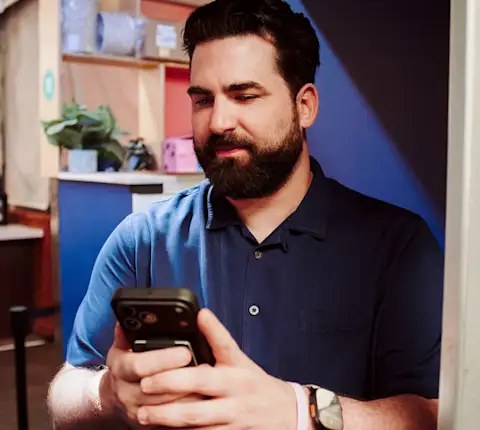
The customer places an order: A customer orders through an on-demand delivery app or website and adds their delivery address, drop-off instructions, and payment options.
You confirm and prep: The order lands on your tablet or point-of-sale (POS) system, the software that runs your register, and you accept it and start packing.
A driver is matched: Dispatch software, the system that assigns delivery requests to drivers, picks a nearby driver and times their arrival to your prep time.
The handoff: The driver checks in and confirms the order, and your team hands it off using Restaurant Dasher Pickup driver pickup best practices.
Last-mile delivery: The driver covers the last mile, the final trip from store to doorstep, as the customer follows along with real-time tracking.
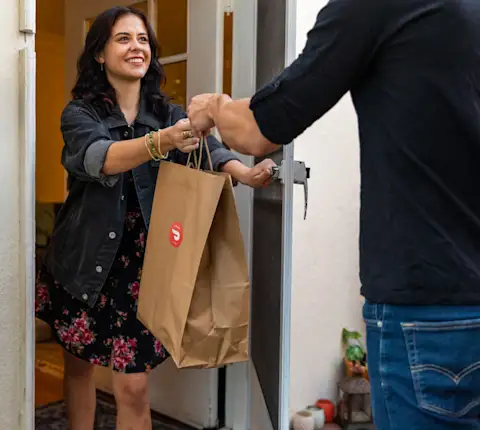
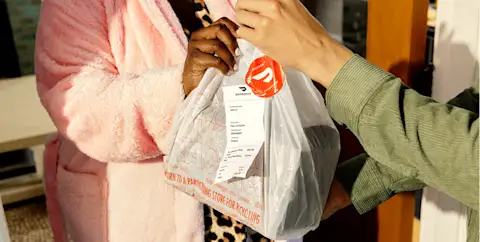
Drop-off and confirmation: The driver hands over the order or leaves it at the door, and may take a photo as digital proof of delivery.
Ratings and payout: The customer can leave ratings and reviews, and you receive payment for the order.
On DoorDash, orders arrive with delivery by Dashers through DoorDash. Your team focuses on prep and handoff, while dispatching, routing, and ETAs (estimated times of arrival) run in the background.
The technology behind an on-demand delivery system
Four systems keep each order moving behind the scenes, from your counter to the customer’s door.
Order management: Order management software connects to your tablet or POS system and sends new orders straight to your kitchen or stockroom. Some systems link through an API (application programming interface), a tool that lets two software programs share data. Your staff sees every order in one place, which can help reduce missed or duplicate orders.
Automated dispatch and routing: Dispatch software assigns each delivery request to a nearby driver. Route optimization, or route planning that finds an efficient path, helps that driver reach the customer quickly.
Real-time GPS tracking and customer notifications: GPS tracking follows the driver from pickup to drop-off. Real-time tracking features send customers updates and ETAs through a mobile application, so fewer customers may need to call your store to check on an order.
Digital proof of delivery: At drop-off, the driver can take a photo of the order at the door. That photo can protect you in “order not received” disputes because it shows the order arrived.
When you work with a delivery partner, you don’t need to buy or manage any of this technology yourself.
3 ways to offer on-demand delivery service at your business
You can offer on-demand delivery in three main ways. Each model changes who drives, what you pay, and how new customers find you.
Fulfillment model | Who drives | Upfront cost | How customers find you | Best fit |
|---|---|---|---|---|
In-house drivers | Your own staff | High: wages, insurance, and vehicles | Your website, phone line, and social media | Stores with steady, high delivery volume |
On-demand courier service | Drivers from a third-party courier | No fleet to fund; you pay a fee per delivery | Your own ordering channels | Stores that already have online ordering traffic |
Delivery marketplace | Drivers from the marketplace’s network | No fleet to fund; you pay a commission per order | The marketplace’s app and website | Businesses looking to reach new customers |
In-house drivers: Your own fleet gives you full control, but the costs pile up. You pay wages, insurance, and vehicle expenses, plus driver time during slow hours when few orders come in. Before you hire, review how self-delivery works and plan for each cost.
On-demand courier services: Courier services and other on-demand delivery companies send a driver when you request one. You pay a fee for each trip, but customers still need to find you through your own website or phone line.
Delivery marketplace: A marketplace gives you access to a network of drivers without the overhead of running a fleet. It also lists your business in an app where customers already browse. DoorDash Marketplace is an app where customers browse, discover, and order from local businesses, with delivery by Dashers through DoorDash. If you have your own drivers, you can still use Self-Delivery on Marketplace.
Why more merchants are adding on-demand delivery
For restaurants, most customer visits no longer happen in the dining room. Nearly 75% of restaurant traffic now happens off-premises, according to the National Restaurant Association.
Retailers face growing online demand too. According to the U.S. Census Bureau, e-commerce (online shopping) reached 17.1% of total US retail sales in Q2 2026, growing 12.2% year over year.
Fast delivery helps you meet that demand, but new customers also need a way to find you. Many shoppers don’t search for a specific business. They browse. In 2025, over 55% of consumer orders at new restaurants on DoorDash were a result of browsing, not a specific restaurant search (based on internal DoorDash data from Jan 2025 – December 2025).
For a new restaurant, showing up where customers browse can offer a competitive edge.
What does on-demand delivery cost?
Your costs depend on the fulfillment model you choose. On-demand delivery logistics typically follow one of three pricing models.
Per-delivery fees: Courier services charge a fee for each trip. You pay only when you send an order out, which can suit stores whose delivery volume changes from week to week.
Commission-based marketplace pricing: Marketplaces charge a commission, the percentage of each order a platform keeps in exchange for discovery, delivery, and customer support. Your cost rises and falls with your sales. Plans vary, so you can compare Marketplace plan benefits and choose one that fits your margins.
Running your own fleet: In-house delivery comes with costs you might not think of until it’s too late. Beyond wages, you may pay for insurance, fuel, vehicle repairs, and driver time during slow hours.
On DoorDash, you can also join DashPass, a membership program that gives customers reduced delivery fees on eligible orders. Joining DashPass can help drive over 40% more orders on average (based on internal DoorDash analysis of SMB merchants on DashPass compared to non-DashPass merchants over a 30-day period (2024–2025)).

Common on-demand delivery challenges (and how to solve them)
Delivery adds new tasks for a team that’s already busy. These fixes can help you protect the delivery experience and keep your team on track.
Keeping orders fresh in transit: According to National Restaurant Association data reported by Restaurant Business, 90% of consumers say they’d order a greater variety of items to go if the food kept its quality. Choose food delivery packaging that holds temperature and prevents spills. Non-food merchants need the right packaging too. Florists, pet stores, and grocery stores should use sturdy, sealed bags to protect items on the way.
Avoiding wrong or canceled orders: Merchants who avoid order cancellations in the first month see, on average, 50% more sales than other merchants (based on internal DoorDash data from 5/1/2025 to 5/1/2026). Check each order against its ticket before you seal the bag. When an item runs out, update your menu or catalog right away.
Handling rush periods: Adjust your prep times during busy hours to match your capacity. Accurate prep times help drivers arrive when orders are ready instead of waiting at your counter.
Keeping handoffs quick: A dedicated pickup shelf near the entrance helps drivers find orders fast. One staff member can serve as the delivery point person, confirming orders and answering driver questions.
How to start offering on-demand delivery in 5 steps
You can start offering on-demand delivery services in five steps:
Choose your fulfillment model: Review the three models above and pick the one that fits your staff, budget, and delivery volume.
Build an online menu or catalog: Add clear photos and short descriptions for each item. A restaurant might list each dish, while a grocery store lists its produce, snacks, and household goods. Reaching at least 50% menu photo coverage can increase sales by 13% on average (based on internal DoorDash analysis of SMB merchants increasing menu photo coverage from 0% to at least 50% (2023–2025)).
Set up a packing and pickup station: Clear counter space near your entrance and stock it with bags, labels, and receipts. A florist, for example, could keep sleeves, water tubes, and tape ready for bouquet orders.
Set accurate prep times and store hours: Update your prep times to reflect how long orders take during busy and slow periods. Keep your store hours current so customers can only order when you’re open.
Go live and watch your first orders: Turn on delivery and track your first few orders closely. Adjust prep times or packing steps as needed.
Your first order could arrive quickly. More than 20% of stores get their first order within 24 hours of activation (based on internal DoorDash data from May 2025 through December 2025).
Bring fast delivery and new customers to your door with DoorDash Marketplace
You don’t need to hire drivers or build technology to offer fast delivery. With DoorDash Marketplace, dispatch and tracking come built in, with delivery by Dashers through DoorDash. Customers browsing for something nearby can also discover your business in the app. If you’re already on Marketplace, try tightening prep times, adding menu photos, or joining DashPass.
Get Started with DoorDash Marketplace