A third-party delivery service handles the ordering, dispatching, and delivery for you, in exchange for a fee on each order. Picking the right partner comes down to a handful of clear tradeoffs: how many customers the platform reaches, what it charges, how much customer data you can see, and how it handles orders that go wrong.
This guide walks through all of it, so you can choose with confidence.
TL;DR
A third-party delivery service takes and delivers customer orders on your behalf, charging a commission on each one.
The main tradeoff is cost. You pay a percentage of every order, but you skip the expense of hiring drivers and running your own delivery. You also save on marketing, since the platform brings new customers to you instead of you paying to find them.
Compare partners on four things: how many customers the platform reaches, what it charges, how much customer data you can see, and how it handles orders that go wrong.
The same core benefits apply whether you run a restaurant, grocery store, convenience store, or specialty shop.
Signing up takes a few steps: create your account, choose how orders reach you, share your menu or catalog, and add your bank details to go live.
What Is a Third-Party Delivery Service?
A third-party delivery service is an outside company that takes and delivers customer orders for you. It acts as an intermediary between your business and the people ordering from you. You cook the food or pack the order. The service handles the technology, the delivery drivers, and the delivery logistics that carry it to the door.
These companies are also called third-party delivery platforms. Customers browse and buy through the platform's website or mobile apps. The order lands in your kitchen or store. A driver from the platform's driver network picks it up and delivers it, often with real-time tracking so the customer can follow it the whole way. In return, you pay a fee on each order, usually a percentage called a commission.
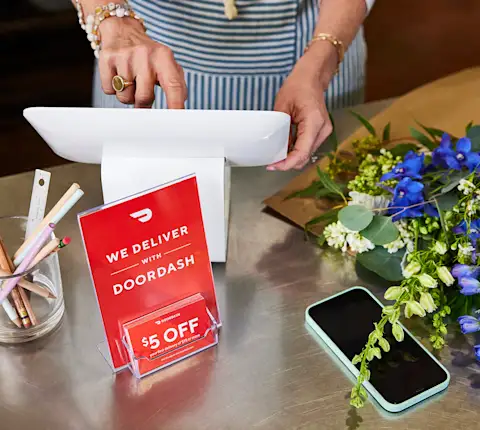
The model works for more than restaurants. Grocery stores, convenience stores, liquor shops, florists, retail stores, and pet supply stores all use third-party delivery services the same way. DoorDash, for example, serves restaurants and retailers across categories like convenience, grocery, and pet supplies, with a large base of customers already ordering nearby.
The draw is simple. You get access to a huge base of customers already using the platform, so you can acquire new customers without spending on marketing to find them yourself. You also get on-demand delivery, using the platform's technology and drivers instead of your own. For many merchants, that's the fastest way to add delivery and reach new customers without adding overhead.
How Third-Party Delivery Works
The process is simple from the outside, even though a lot happens behind the scenes.
Here's the basic flow:
Customer places an order on the platform → the order routes to your store → a driver is dispatched → the driver picks up and delivers → the platform charges a commission on the order
Let's break down each step.
The customer orders. A customer browses the platform's website or mobile app, picks your restaurant or store, and checks out. Payment is handled by the platform, so you don't process the card yourself.
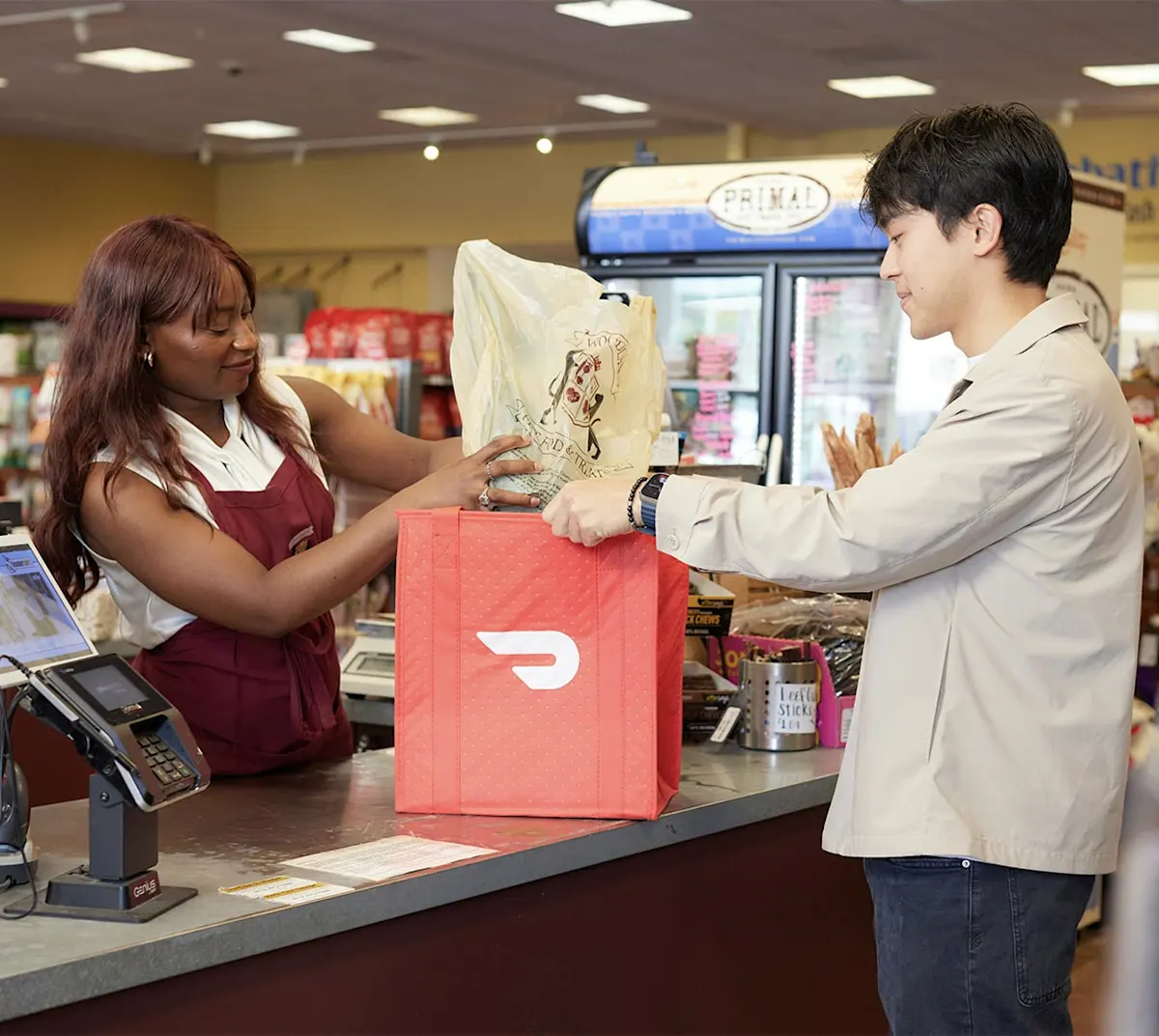
The order reaches you. It lands on your tablet, your POS system, or a dedicated device, depending on how you're set up. For restaurants, your team preps the order like any other ticket. For retail, you can choose how it gets fulfilled: a driver can come pick items from your shelves, or your team can pull and pack the order ahead of time so it's ready when the driver arrives.
A driver is dispatched. The platform's software handles route planning and sends a nearby driver to your door. You don't manage the delivery staff or the schedule.
Delivery happens. The driver picks up the order and brings it to the customer. Many platforms offer real-time order tracking, so the customer sees where their order is the whole way. Some also capture proof of delivery, like a photo at the door.
You pay a commission. The platform takes a percentage of the order as its fee. You keep the rest.
This flow is the same whether you sell food, groceries, or flowers. The platform absorbs the delivery logistics so you can focus on running your business.
Benefits of Partnering With a Third-Party Delivery Service
Adding delivery through a partner brings a few clear wins, no matter what you sell. You reach more customers, add sales without adding overhead, and hand off the hard parts of delivery to someone else.
Reach new customers and grow sales
A listing puts your business in front of people who are already browsing for something to order. Many of them aren't looking for you by name yet. For restaurants, over 55% of first-time orders on DoorDash in 2025 came from people browsing rather than searching for a specific place (based on the 2026 DoorDash & SevenRooms Delivery Industry Trends Report).
Demand for delivery is steady. For restaurants, 37% of adults order delivery at least once a week (National Restaurant Association, 2025 Off-Premises Restaurant Trends). Delivery and pickup also add a new stream of sales on top of your walk-in and dine-in business, so instead of replacing revenue, you're stacking more on top of what you already earn.
Improve your profit margin
Delivery orders use the kitchen, staff, and inventory you already have. You're not paying for a separate operation. That helps protect your profit margins, since each order adds revenue without adding much fixed cost.
Higher order volume also supports scalability. As demand grows, the platform handles more deliveries without you hiring more delivery staff.
Reduce your operational burden
Running your own delivery is expensive. You'd need to hire, train, and insure drivers, plus manage schedules and routes every day. A third-party partner absorbs all of that. Their drivers and technology handle same-day delivery, so your team stays focused on making orders and serving customers in front of you.
Works across merchant types, not just restaurants
These benefits aren't limited to food. Grocery stores, convenience stores, liquor shops, florists, and retailers all use third-party delivery services the same way. Any business that fills orders and wants to reach nearby customers can plug into the same model.
The Real Costs and Tradeoffs to Know Before You Sign Up
Third-party delivery adds sales, but it isn't free. Before you sign up, it helps to know exactly what you'll pay and what happens when an order doesn't go as planned.
Commission and fee structures
Most third-party delivery services charge a commission, which is a percentage of each order rather than a flat fee. The more you sell, the more you pay, and the reverse is true on slow days. That keeps your costs tied to your sales.
Commission isn't always the only line item. Here's how the common costs break down:
Cost type | What it is |
|---|---|
Commission | A percentage of each order the platform takes as its core fee. |
Listing or advertising add-ons | Optional tools to boost your visibility, like promotions or sponsored placement. |
Payment processing | A fee to handle the customer's card payment, sometimes folded into the commission. |
Commission rates vary by platform and by the plan you choose. Higher tiers usually cost more but reach more customers. On DoorDash pricing, for example, delivery commission runs from 15% to 30% depending on the plan. Always check a provider's own pricing page for the latest numbers.
What happens when something goes wrong
Orders go wrong sometimes. An item is missing, the food arrives cold, or a delivery is late. The difference is how your partner handles it.
Before you commit, find out two things. First, how does the platform resolve order accuracy disputes, and who covers the refund? Second, how fast can you reach support when a problem hits during a busy shift? A partner with 24/7 support and a clear dispute process saves you headaches and protects customer satisfaction.
How to Partner With a Third-Party Delivery Service, Step by Step
Signing up is simpler than most merchants expect. Most platforms walk you through it, and you can be live in a few days. Here's what the process looks like.
Step 1: Choose your platform and partnership plan
Start by picking your platform and the plan that fits your goals.
Enter your basic business details: your name, address, store hours, and the type of business you run. Many platforms offer tiered plans, so pick the one that matches how much reach you want and what you're ready to spend.
Step 2: Choose your order protocol
Decide how orders will reach your store.
This is the choice with the biggest day-to-day impact, so give it some thought. You usually have three options:
POS integration: Orders flow straight into your existing POS system, so everything lives in one place.
Aggregator: Orders from several platforms feed into one device or dashboard.
Tablet: The platform gives you a dedicated tablet that receives orders on its own.
Pick the setup that fits how your team already works.
Step 3: Share your menu or catalog and hours
Add what it is you’re selling.
Upload your menu or product catalog, with prices and clear photos. Many platforms offer a free professional photoshoot to make your items look their best.
A few tips for delivery: feature items that travel well and hold up in transit, and highlight your higher-margin products. Good photos and accurate descriptions help customers order with confidence.
Step 4: Add your bank account and go live
Set up direct deposit so you get paid.
You'll add your bank details, review and sign the partnership agreement, and activate your store. Once you're approved, your listing goes live, and orders can start coming in.
Making the Most of Your Delivery Partnership
Going live is the start, not the finish. The merchants who get the most from delivery keep an eye on their numbers and use the tools their platform gives them. Here's how to keep growing after launch.
Track performance with sales analytics
Your platform's dashboard shows you what's working. DoorDash’s Merchant Portal lays out total sales, average order size, and how many orders come from new versus repeat customers.
Check it regularly. When you see which items sell best and when your busy hours hit, you can plan staffing, tweak your menu, and spot slow periods before they cost you.
Manage on the go with the Business Manager App
You're not always at a desk. The Business Manager App lets you run your delivery business from your phone. Track live orders, fix issues, update your hours, and pause service when you need to, all from wherever you are.
Grow with Promotions
Promotions help you attract new customers and bring back old ones. A well-timed discount or offer can fill slow shifts and boost order volume.
The DoorDash Promotions tool delivers a median return of $4 in incremental sales for every $1 spent (based on internal DoorDash data from Jan 2025 through May 2025). Start small, watch what works, and adjust from there.
Get merchant support when you need it
When something breaks during a rush, you want help fast. Look for a partner with around-the-clock support you can reach by phone or chat. Larger partners often get account management too, giving you a direct line for bigger questions.

Set Yourself Up for Success
A good delivery partner works best when you stay on top of a few key things. Here are three habits that help merchants get the most out of their partnership.
Track delivery's impact on your bottom line
Delivery adds sales, and it's worth knowing your true margin on each order. Check your reports often, and compare your delivery revenue against the commission and fees you pay. That way, you always know your partnership is paying off.
Keep orders ready for pickup
A smooth handoff keeps everyone happy. When orders are ready close to pickup time, drivers spend less time waiting, deliveries arrive on time, and food shows up the way it should. That means better ratings and more satisfied customers.
Compare more than the brand name
A familiar name is a nice starting point, but the details matter more. Look past the logo and compare reach, cost, data access, and support, so you choose the partner that actually fits your business.
Grow Your Business with DoorDash Marketplace
Now that you know what to look for, the next step is simple.
DoorDash Marketplace connects your business to millions of customers already ordering nearby. You get straightforward commission-based pricing, no delivery fleet to manage, and access to a large base of people looking for something new. Whether you run a restaurant, a grocery store, or a specialty shop, you can be up and running in a few steps.
Ready to reach more customers? Get started with DoorDash Marketplace.